
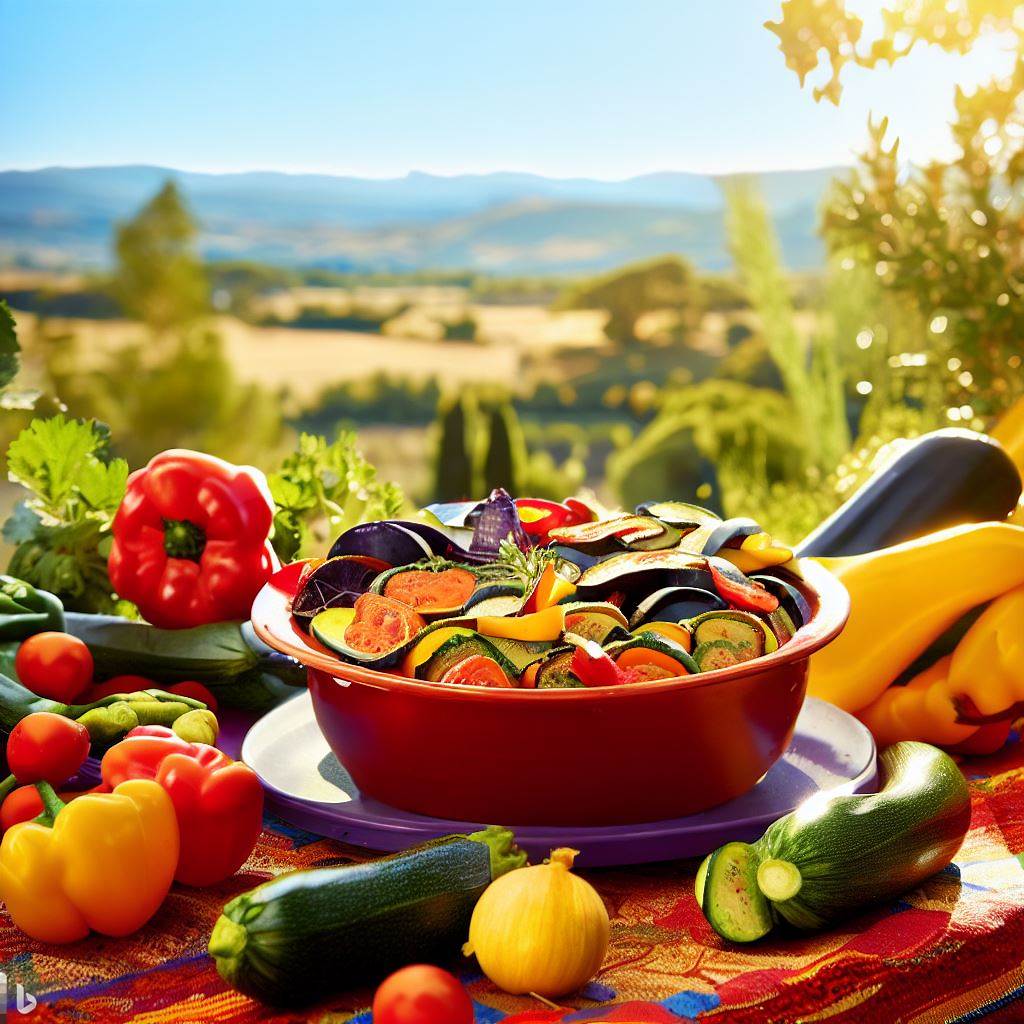
Ratatouille—no, not the Pixar classic, although it plays a part in our story. I mean the Provençal dish that’s been a staple of French kitchens for centuries. Just envision it: a medley of eggplant, zucchini, peppers, and tomatoes so harmoniously intertwined that it sings of summer in every bite.
My friend Chef HistorEats extended an invitation to write a guest post, and it struck me that I should explore a dish that connects the past with the present—much like the intriguing fusion of topics you find here on Bites & Bytes. Ratatouille isn’t just a collection of veggies; it’s a bridge between ages, a blend of cultural heritage, and a testament to the transformative power of food.
The Humble Beginnings
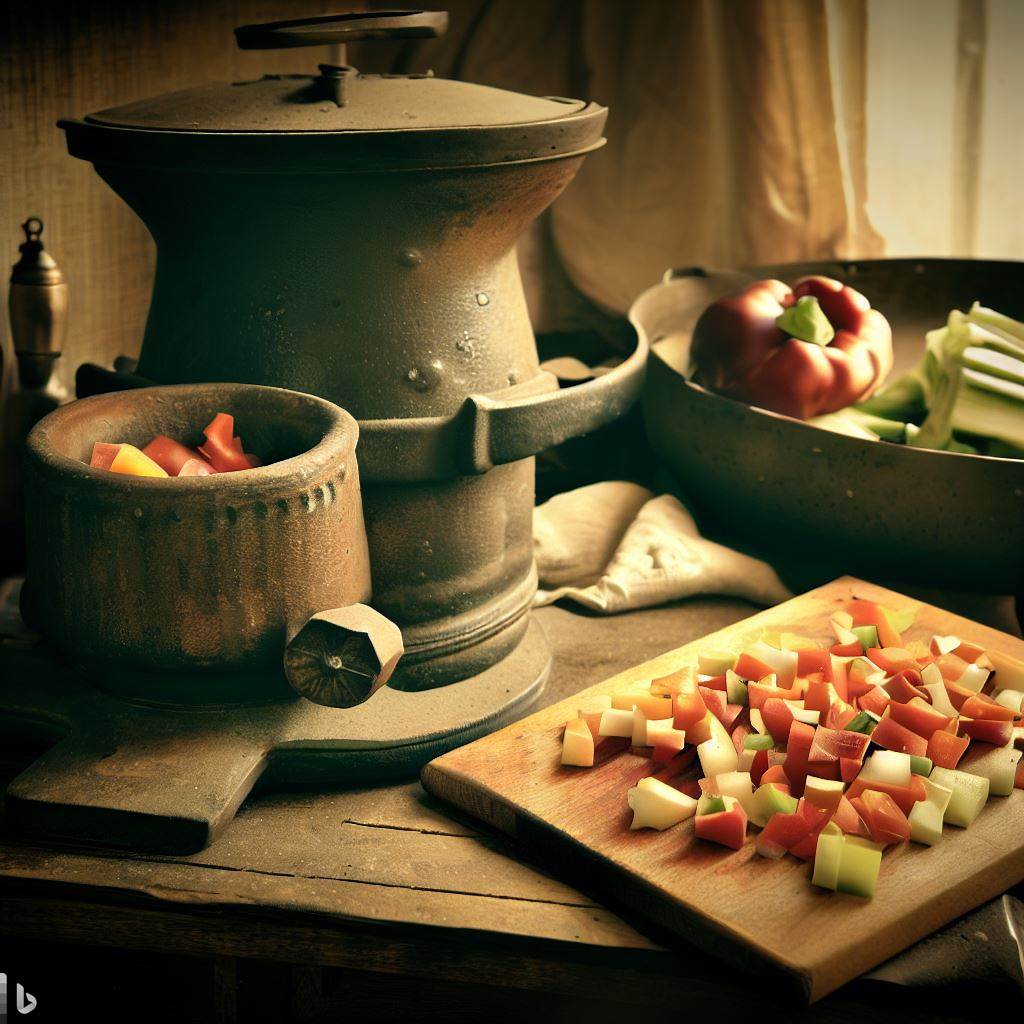
Originating from Nice in the sunny Provence-Alpes-Côte d’Azur region of France, ratatouille started life as a humble peasant dish. It’s quite intriguing how many of today’s culinary delights began as solutions to necessity.
Global Influences
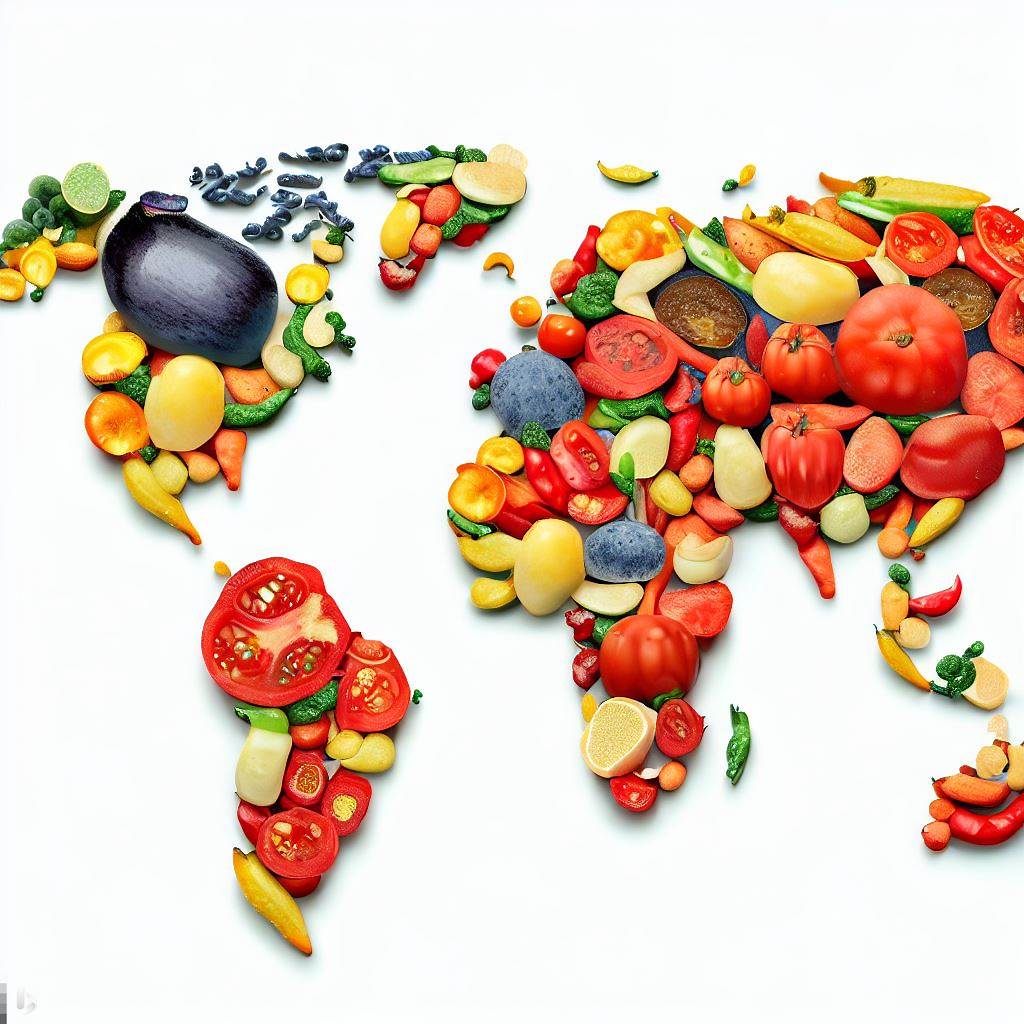
And now a twist: the tomatoes that play a key role in ratatouille didn’t arrive in Europe until the late 16th century, courtesy of South America. Your quintessential French dish has roots that stretch far beyond its Gallic borders—a fine example of culinary globalization at its best.
The Digital Transformation
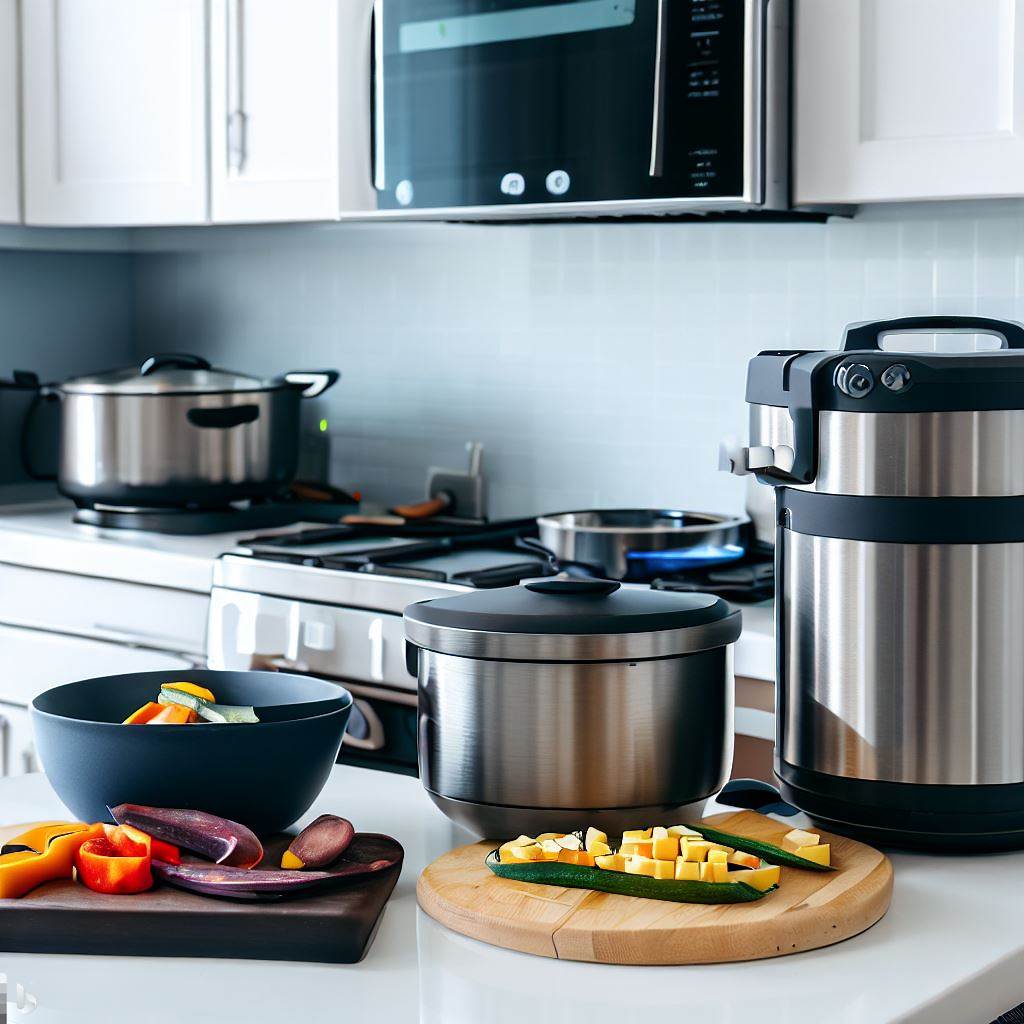
Ratatouille has made its way into the digital age, transitioning from stovetop simmering to modern conveniences like sous-vide and Instant Pots. While technology has its merits, let’s not forget the sacred act of taking time with our food, as generations before us did.
Let’s Cook!
What’s a culinary exploration without getting your hands dirty? Let’s delve into a ratatouille recipe that respects its storied past while acknowledging modern kitchen wizardry.
Timeless Ratatouille with a Modern Twist
Ingredients
- 1 large eggplant, diced
- 2 zucchinis, diced
- 1 yellow bell pepper, diced
- 1 red bell pepper, diced
- 3 medium tomatoes, diced
- 1 large onion, finely chopped
- 4 cloves of garlic, minced
- 1/4 cup olive oil
- 1 teaspoon dried thyme
- 1 teaspoon dried rosemary
- Salt and pepper to taste
- Optional: 1 tablespoon of balsamic vinegar for a dash of acidity
Instructions
- Preheat your oven to 400°F (200°C): While you can do this entirely on a stovetop, I find that a little oven time gives the dish a robust flavor that’s hard to beat.
- Salt the Eggplant: Toss the diced eggplant in a bowl with a generous pinch of salt. Let it sit for about 20 minutes to draw out bitterness. Rinse and pat dry.
- Sauté the Veggies: Heat half of the olive oil in a large skillet over medium heat. Add the onions and garlic, sautéing until translucent. Add the bell peppers and zucchinis and cook until slightly softened.
- Add the Spices: Stir in thyme, rosemary, salt, and pepper. Let these aromatic wonders do their thing for a couple of minutes.
- Introduce the Tomatoes: Add the tomatoes to your vegetable medley and cook for another 5-7 minutes, allowing the flavors to meld together.
- Bake or Simmer: Transfer the sautéed veggies to an oven-safe dish and bake for 20 minutes. If you’re sticking to the stovetop, lower the heat and cover, letting it simmer for the same amount of time.
- Optional Step: For a dash of acidity and complexity, stir in a tablespoon of balsamic vinegar before serving.
- Serve: This dish can be enjoyed hot, room temperature, or even cold! Serve it as a main course, or a side dish—the choice is yours.
I want to extend a heartfelt thanks to Chef HistorEats for this opportunity to share in a culinary discourse that’s as varied as it is enriching. As you engage in the simple yet profound act of cooking, remember that each ingredient, each stir of the pot, connects you to a tapestry of traditions.
Bon appétit!

 Bites & Bytes
Leave a comment