
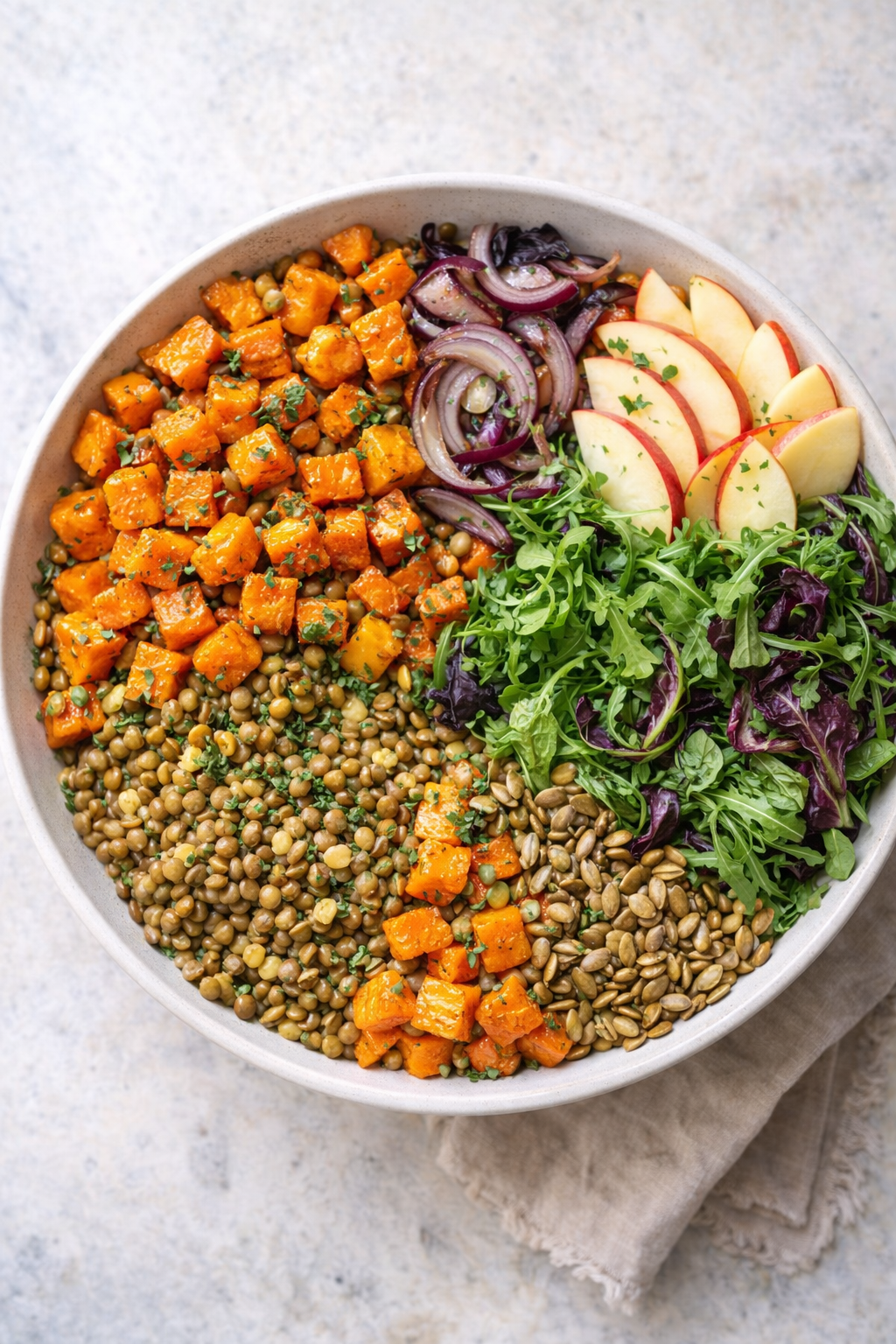
Salad has a branding problem.
Somewhere along the way, it became shorthand for restraint. For compromise. For the thing you order when you’re “being good.” And every time I hear someone describe salad as “just leaves,” a small part of my systems-engineering heart twitches.
Because a well-built salad is not an afterthought. It’s architecture.
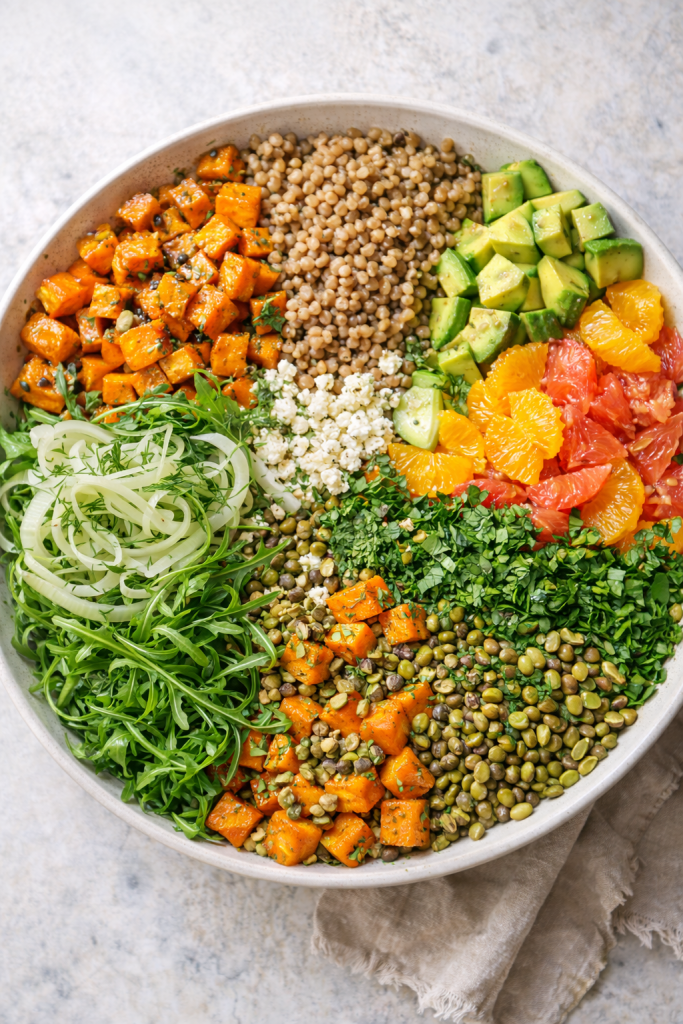
It’s a layered stack of textures, temperatures, acid-fat balances, volatile aromatics, enzymatic browning, soil microbiology, and global trade routes—all converging in a single bowl. It’s a distributed system disguised as lunch.
I learned this properly one summer when I tried to grow my own greens on a tiny London balcony. I had sensors monitoring soil moisture, a spreadsheet tracking sun exposure, and a watering schedule optimized like a cron job. And yet the rocket (arugula, if we’re speaking transatlantic) tasted better when I stopped over-controlling it and let it struggle just a bit.
Salad, like code, thrives on tension.
Byte: The Salad as a Layered Architecture
In software, we talk about layered architecture: presentation layer, logic layer, data layer. Each tier has a responsibility. Each must communicate cleanly with the others. Chaos at one layer propagates.
Salad works the same way.
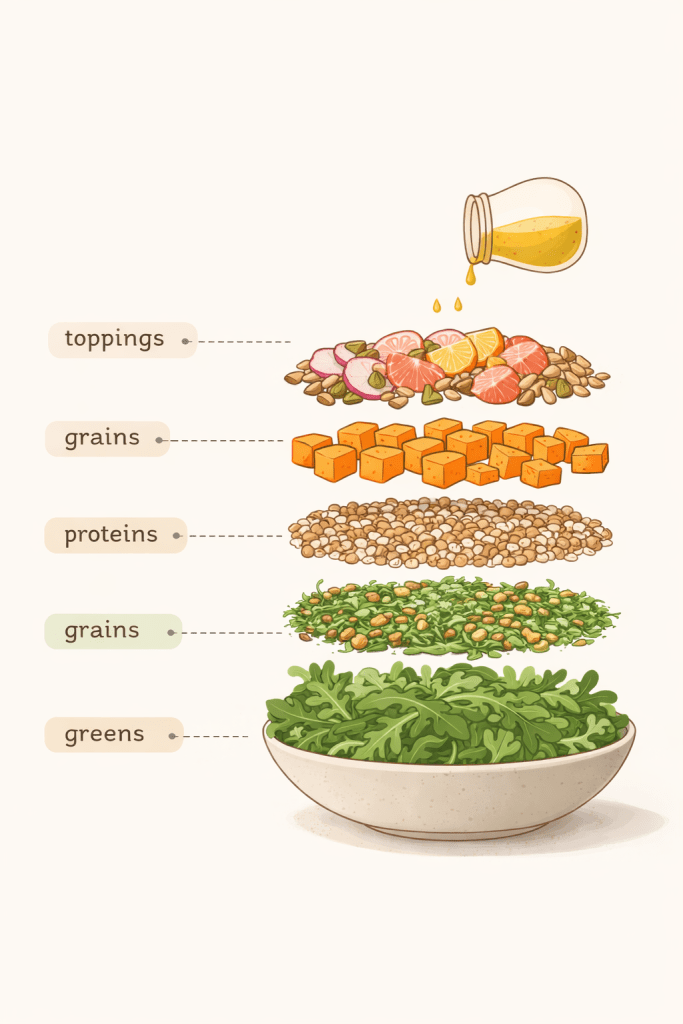
Base layer: structural greens. This is your framework. Romaine for crunch and water content. Kale for tensile strength and bitterness. Butter lettuce for softness and hydrophilic tenderness.
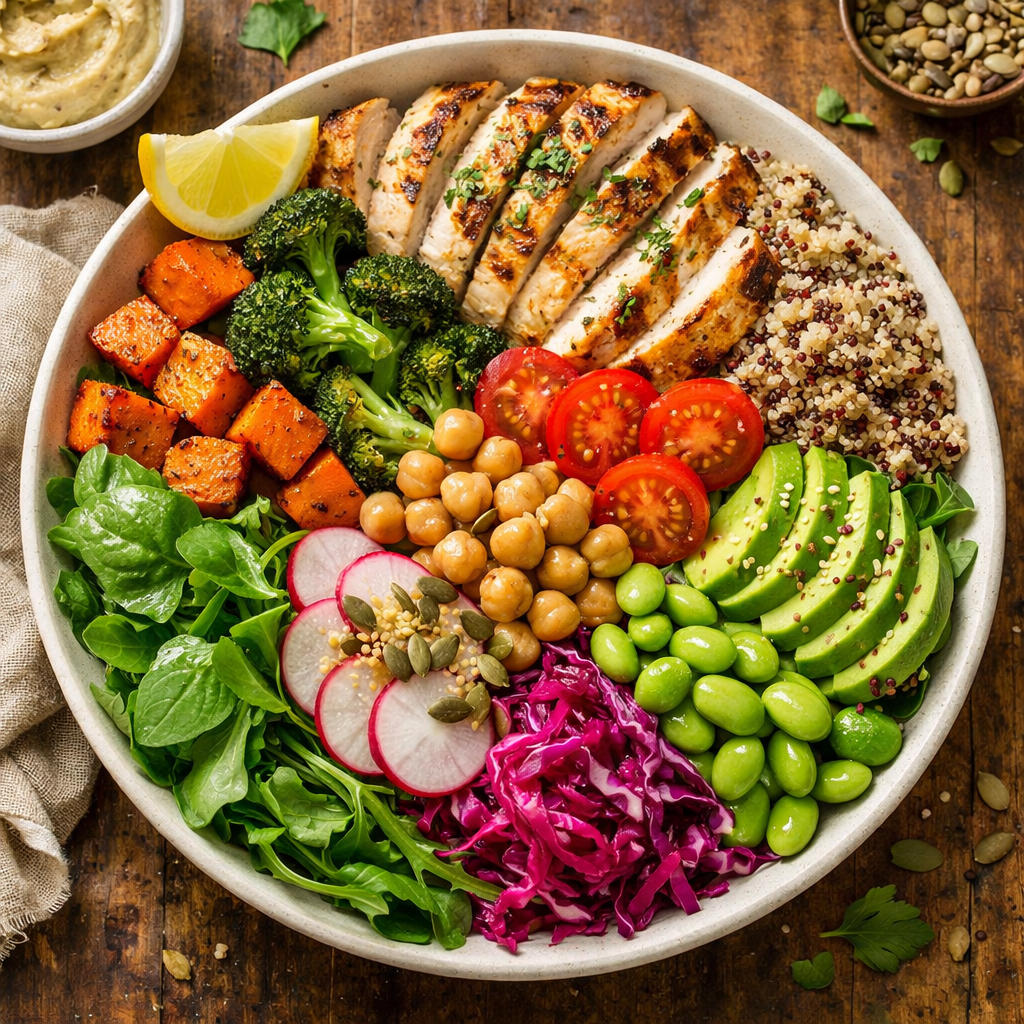
Body layer: proteins and complex carbohydrates. Lentils, grilled chicken, chickpeas, quinoa, roasted squash. This is your computational engine—macros that provide energy density and satiety.
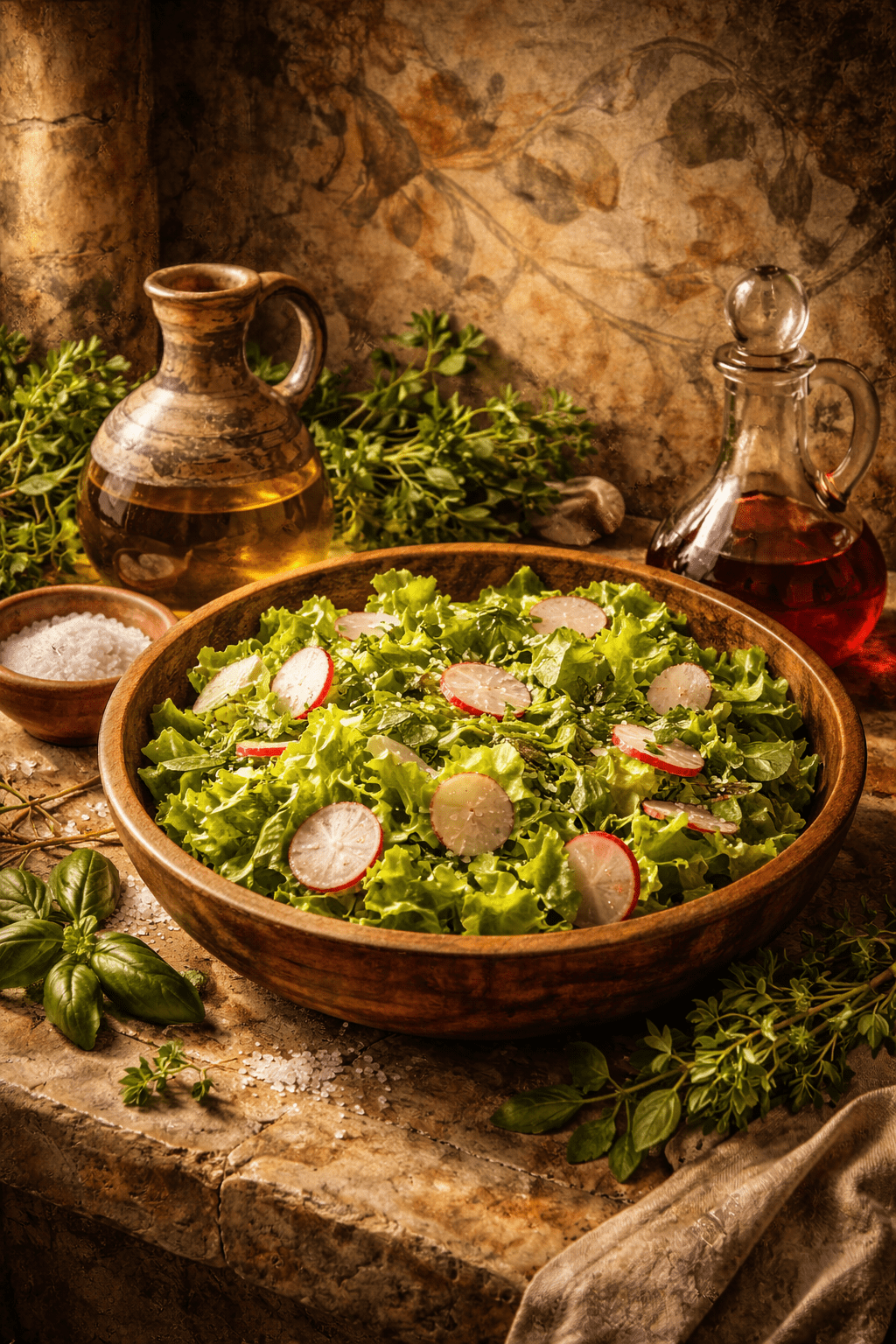
Contrast layer: acidity, crunch, sweetness. Pickled onions. Toasted seeds. Apple slices. Radish coins. These are your interrupts—sharp, bright, attention-commanding.
Emulsified layer: dressing. This is the middleware. It binds everything together, reducing friction between disparate components. Without it, your salad is a collection of independent microservices that refuse to talk.
When people say salad is boring, what they usually mean is that the layers were never designed.
Bitter Logic: Why Greens Taste Alive
Let’s get nerdy for a moment.
The bitterness in many salad greens comes from compounds like glucosinolates (in arugula and mustard greens) and lactones (in chicories). These molecules evolved as plant defense systems—deterrents against herbivores.
And yet we seek them out.
Bitterness signals complexity. It stimulates digestion. It makes sweetness brighter by contrast. A salad without bitterness is like code without error handling—too clean, suspiciously flat.
There’s also a temporal dimension. Freshly harvested greens retain more volatile aromatic compounds. That peppery hit in rocket? It degrades over time. The longer your greens sit in transit, the more that edge softens.
This is why local sourcing matters disproportionately with salad. A carrot stew can forgive supply chain distance. A raw leaf cannot.
I once did a side-by-side comparison: supermarket spinach versus spinach picked that morning from a small urban farm. Same cultivar. Same recipe. Wildly different outcomes. The latter had snap, mineral depth, and an almost electric chlorophyll intensity.
That’s not romanticism. That’s post-harvest respiration and cellular breakdown at work.
Bite: The Warm–Cool Contrast Salad
Salad shines when it exploits thermal contrast.
Warm roasted elements against cool greens create convection currents of aroma. As heat meets leaf, volatile compounds bloom upward. It’s sensory engineering.
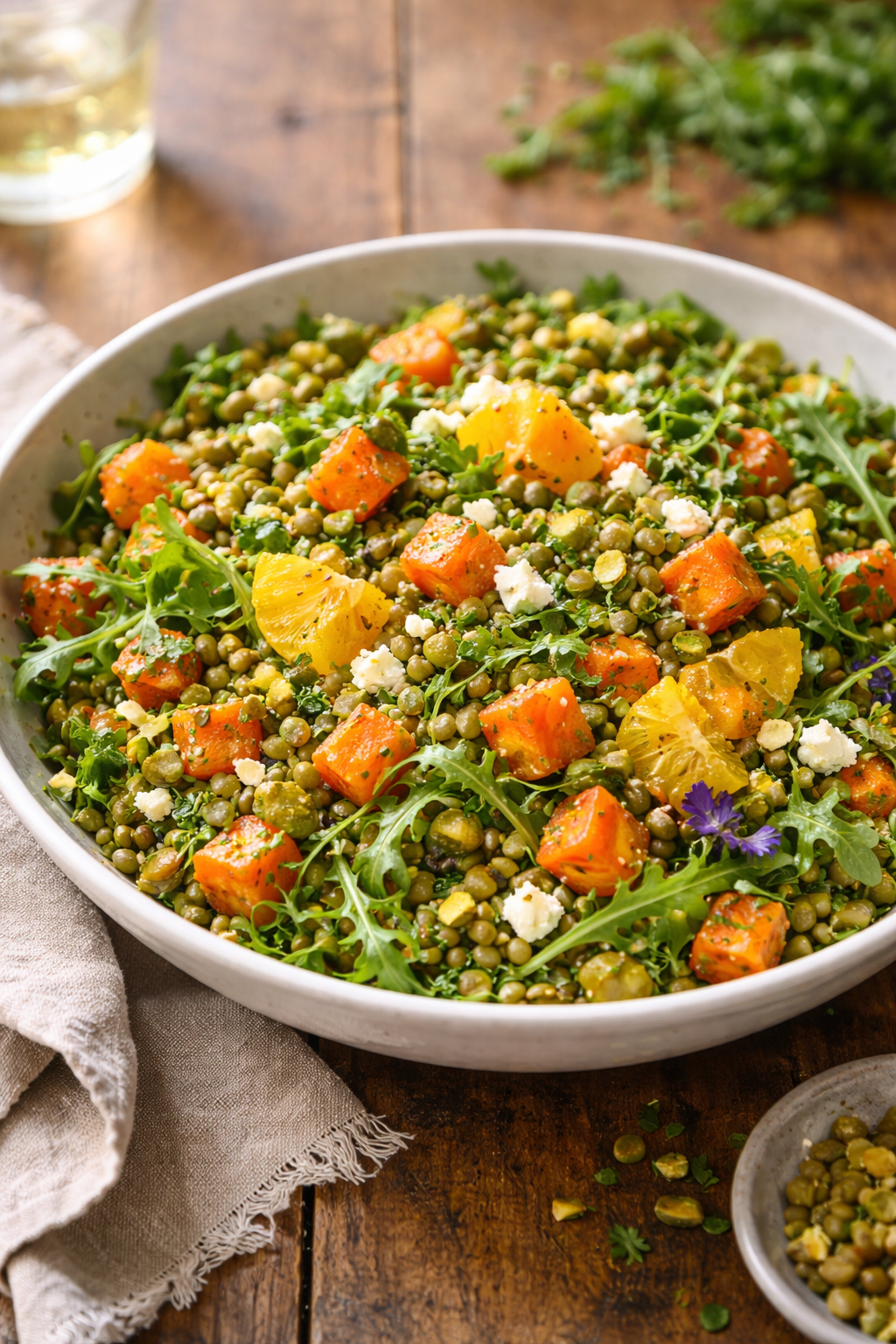
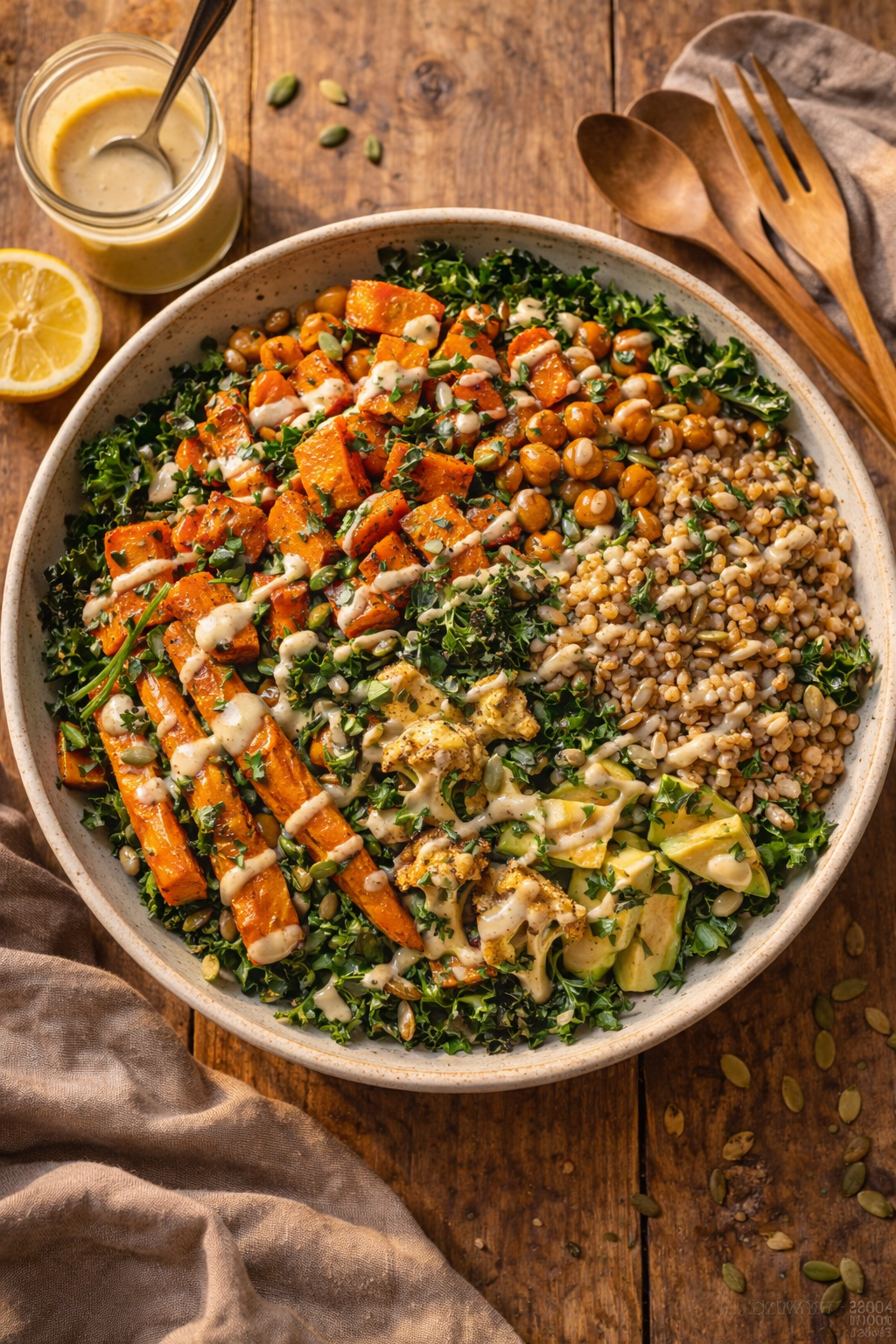
Below is one of my favorite frameworks: a warm roasted vegetable and lentil salad with bitter greens, sharp vinaigrette, and toasted seeds. It’s modular. Adaptable. Built like good code.
Warm Roasted Vegetable & Lentil Salad with Bitter Greens and Sharp Vinaigrette
Ingredients
For the roasted layer:
- 1 large sweet potato, peeled and cubed
- 2 carrots, sliced on a bias
- 1 red onion, cut into wedges
- 1 tablespoon olive oil
- Salt and freshly ground black pepper
For the body layer:
- 1 cup dried green or brown lentils (or 2½ cups cooked lentils)
- 1 bay leaf
- 1 small clove garlic, lightly crushed
- Salt to taste
For the base layer:
- 4 cups mixed bitter greens (rocket/arugula, radicchio, baby kale, or mustard greens)
- 1 cup fresh herbs (parsley, mint, or dill), roughly torn
For the contrast layer:
- ¼ cup toasted pumpkin seeds or sunflower seeds
- ½ apple, thinly sliced
- 2 tablespoons quick-pickled red onions (optional but highly recommended)
For the sharp vinaigrette:
- 3 tablespoons extra-virgin olive oil
- 1 tablespoon red wine vinegar or apple cider vinegar
- 1 teaspoon Dijon mustard
- ½ teaspoon honey (or maple syrup)
- Salt and black pepper to taste
Method
- Roast the vegetables
Preheat your oven to 200°C (400°F). Toss the sweet potato, carrots, and red onion with olive oil, salt, and pepper. Spread on a baking tray in a single layer. Roast for 25–30 minutes, turning once, until caramelized at the edges and tender through. You’re looking for browned surfaces—those are your flavor multipliers.- Cook the lentils
Rinse the lentils thoroughly. Place in a saucepan with the bay leaf and crushed garlic. Cover with plenty of water. Bring to a boil, then reduce to a gentle simmer for 20–25 minutes until tender but not collapsing. Salt only toward the end of cooking to prevent tough skins. Drain and discard bay and garlic.- Build the vinaigrette
In a small bowl or jar, combine olive oil, vinegar, mustard, honey, salt, and pepper. Shake or whisk vigorously until emulsified. Taste and adjust—if it feels flat, add a touch more acid; if sharp, a whisper more honey.- Prep the greens properly
Wash and dry your greens thoroughly. Just before assembling, lightly season them with a pinch of salt and a few drops of vinegar. This primes the leaf surface so the dressing distributes more evenly.- Assemble with intention
In a large bowl, combine warm lentils and roasted vegetables. Toss with a spoonful or two of vinaigrette while still slightly warm—this helps absorption. Add the bitter greens and herbs, gently folding everything together so the leaves barely wilt from the residual heat.- Add contrast and crunch
Scatter toasted seeds, apple slices, and pickled onions over the top. Finish with another light drizzle of vinaigrette and a final crack of black pepper.Serve immediately, while the roasted elements are still warm and the greens retain their snap. The temperature contrast is the quiet engine of this dish—cool leaf, warm lentil, sharp acid, sweet caramelization—all cooperating in a bowl that feels both grounded and alive.
Emulsion as Social Contract
Dressing deserves its own philosophy.
At its simplest, a vinaigrette is an emulsion: oil and water-based acid forced into temporary cooperation. Left alone, they separate. Agitated properly, they unify.
There’s something quietly profound about that.
The ratio matters. Three parts oil to one part acid is canonical, but it’s not sacred. Mustard acts as an emulsifier. Honey alters viscosity. Salt increases ionic strength, subtly changing how flavors register.
And here’s a small but critical detail: salt your greens lightly before dressing them.
This draws out a thin film of moisture on the leaf surface, helping the vinaigrette adhere more evenly. Otherwise, oil slides off like poorly written middleware.
These are the small optimizations that elevate salad from incidental to intentional.
Waste, Water, and the Ethics of Raw
Salads are often positioned as environmentally virtuous by default. It’s not that simple.
Leafy greens can be water-intensive. Out-of-season imports can carry heavy transport emissions. Pre-washed bagged salads often involve plastic, chlorine rinses, and significant food waste due to spoilage.
But salad also offers enormous potential for ethical eating.
It’s one of the easiest formats for:
- Using up leftover roasted vegetables.
- Incorporating regeneratively grown grains and legumes.
- Featuring local produce at peak season.
- Turning herb stems into sauces instead of compost.
The outer leaves of a cabbage that many discard? Thinly sliced, massaged with salt, and dressed with acid, they become extraordinary. Broccoli stems? Julienne them. Toss with lemon and olive oil.
Salad is where scraps find redemption.
Texture Is Not Optional
Most failed salads suffer from textural monotony.
Soft lettuce. Soft cucumber. Soft tomato. Soft disappointment.
Texture is your debugging tool. Crunch from toasted seeds. Creaminess from tahini or yogurt. Chew from farro or barley. Snap from raw fennel. Even a handful of crushed roasted chickpeas can transform the experience.
I think about texture the way I think about latency in a system. Too much sameness and everything feels sluggish. Variation creates perceived speed and interest.
Once, during a dinner with friends, I served what I thought was a beautifully balanced salad—except I’d forgotten crunch. Someone politely said, “It’s lovely, but it feels… quiet.”
They were right.
Now I never build a salad without at least one element that fractures under pressure.
Living Food, Living Systems

Salad reminds me that not all systems need heat to transform.
Cooking often feels like control—applying fire, forcing change. Salad is more about arrangement. Respect. Sequencing.
It asks different questions:
- What is already perfect in its raw state?
- What needs softening?
- What benefits from sharp contrast?
- What happens if we don’t interfere too much?
When I build a salad now, I think about it like a living repository. Ingredients fork from soil, climate, and human labor. They merge in my kitchen. I commit them briefly to a bowl. And then they’re gone—absorbed into memory and metabolism.
Salad is ephemeral. Immediate. A reminder that not all value lies in permanence.
So the next time someone dismisses salad as “just leaves,” smile politely.
And then build something layered. Something bitter and bright. Something that snaps and hums and holds warmth against coolness like a well-balanced system under load.
Because a salad, done properly, isn’t a side dish.
It’s a stack.
 Bites & Bytes
Leave a comment