
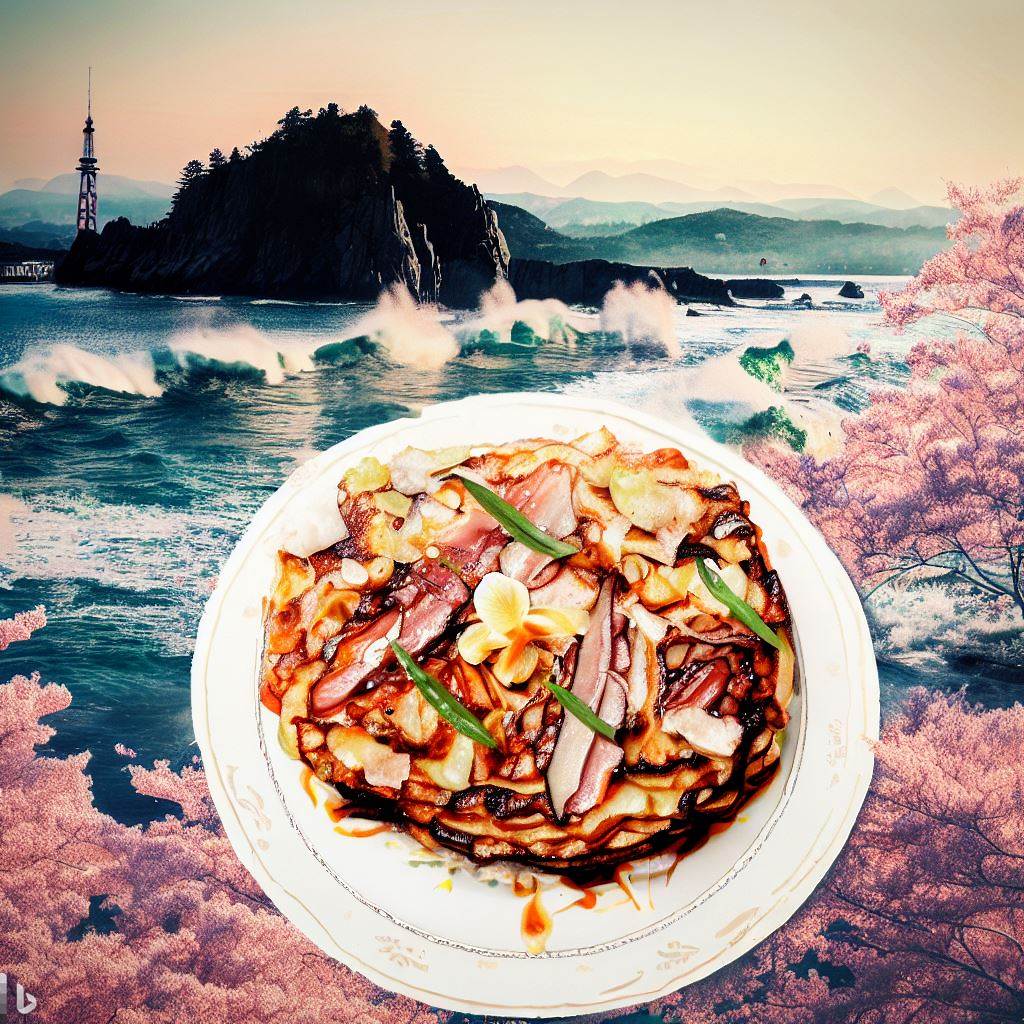
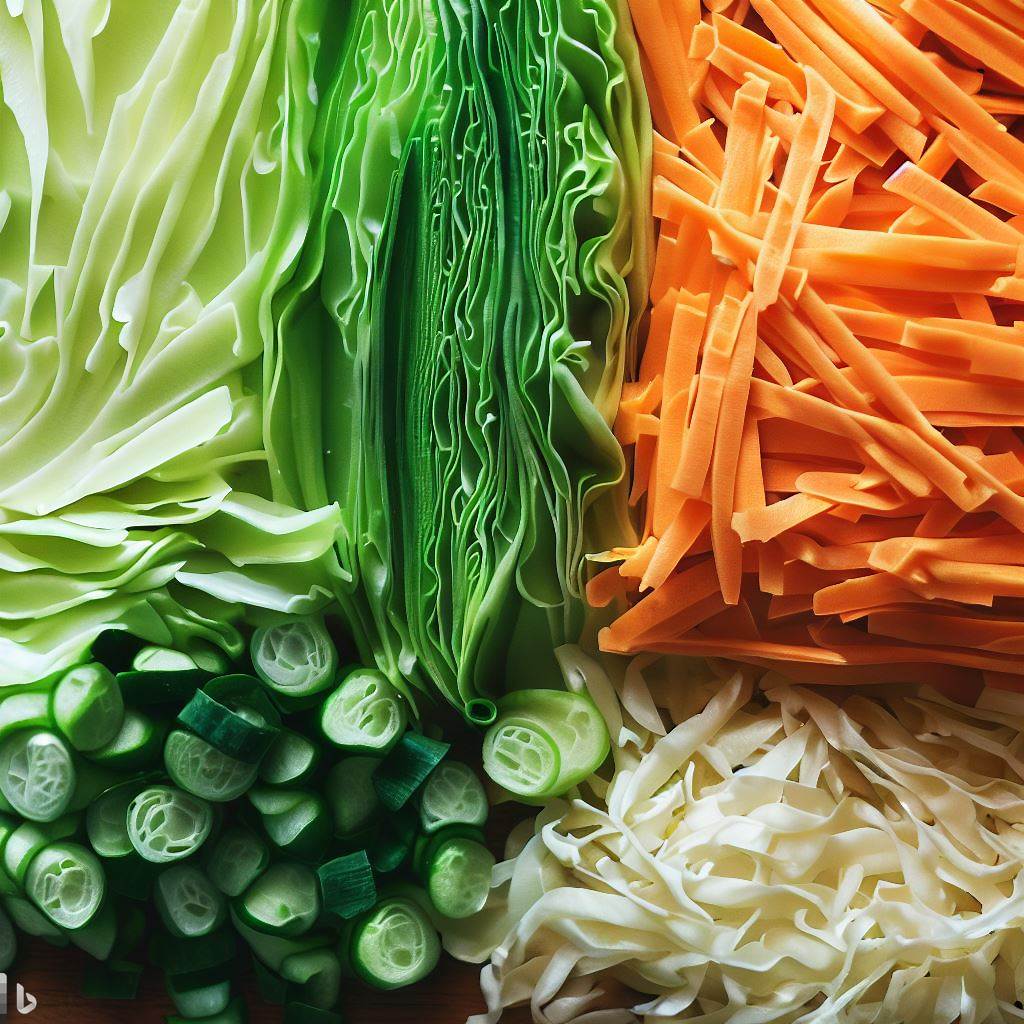
Ah, the sizzle of the griddle, the tantalizing aroma filling the air, and the kaleidoscopic mix of ingredients coming together—few experiences capture the soul of Japanese street food like Okonomiyaki. But as I whisked the batter and layered the cabbage and seafood, Gumbo, my parrot, squawked approvingly as if to say, “Ah, another anthropological and culinary adventure!”
My first encounter with Okonomiyaki was during my study abroad years in Japan. It was then that I realized how this ‘as-you-like-it’ pancake is not just food; it’s an embodiment of the Japanese ethos of “Wa,” or harmony. This delightful dish engages not just your taste buds but also weaves a tale of historical traditions and modern adaptability, like a finely knitted Noren curtain separating the ancient from the contemporary.
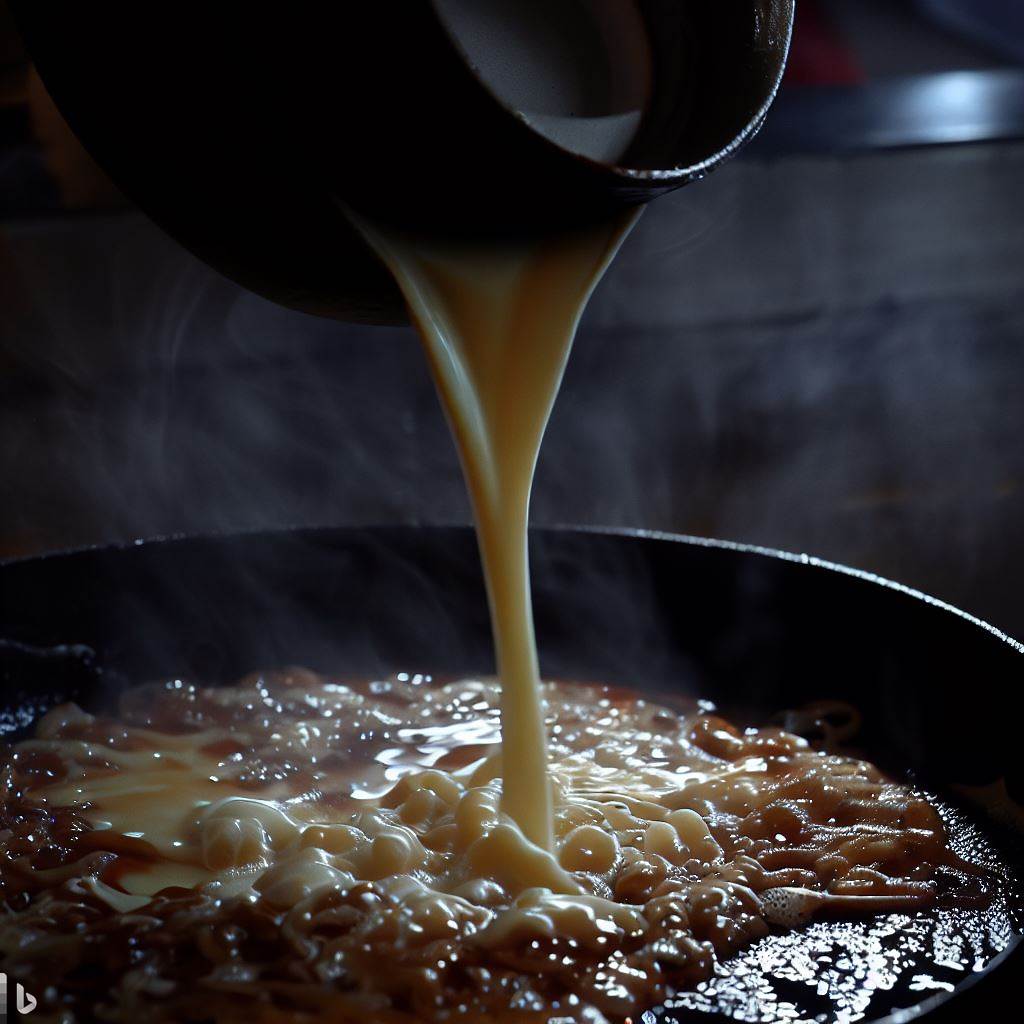
You see, the Okonomiyaki’s history can be traced back to the “Funoyaki,” a spiritual offering made during the Heian Period (794-1185). These were simple grilled cakes offered to the gods during religious ceremonies. Over the centuries, the recipe evolved, but the essence of togetherness remained. Families gather around the griddle even today, adding their preferred ingredients—often indicative of their region—and sharing pieces from the same large pancake. In this way, each Okonomiyaki is a gathering, a tiny universe of flavors encapsulated in a harmonious circle.
Some Bits to Chew On
- Seasonality is Vital: The Japanese philosophy of “Shun” emphasizes using ingredients that are in their prime season. This is particularly important for Okonomiyaki, as the freshness of the ingredients shines through in each bite.
- Regional Varieties: From Hiroshima-style, which involves layering ingredients, to Osaka-style, where everything is mixed into the batter, regional variations are a fascinating lens through which to explore Japan’s culinary geography.
- Umami Explosion: Okonomiyaki sauce is rich in umami, often described as the fifth taste, creating a rounded flavor profile that dances across your palate.
- Accessibility: Okonomiyaki translates to “grill as you like it,” making it a versatile dish that can be adapted for vegetarian or pescetarian diets, like mine!
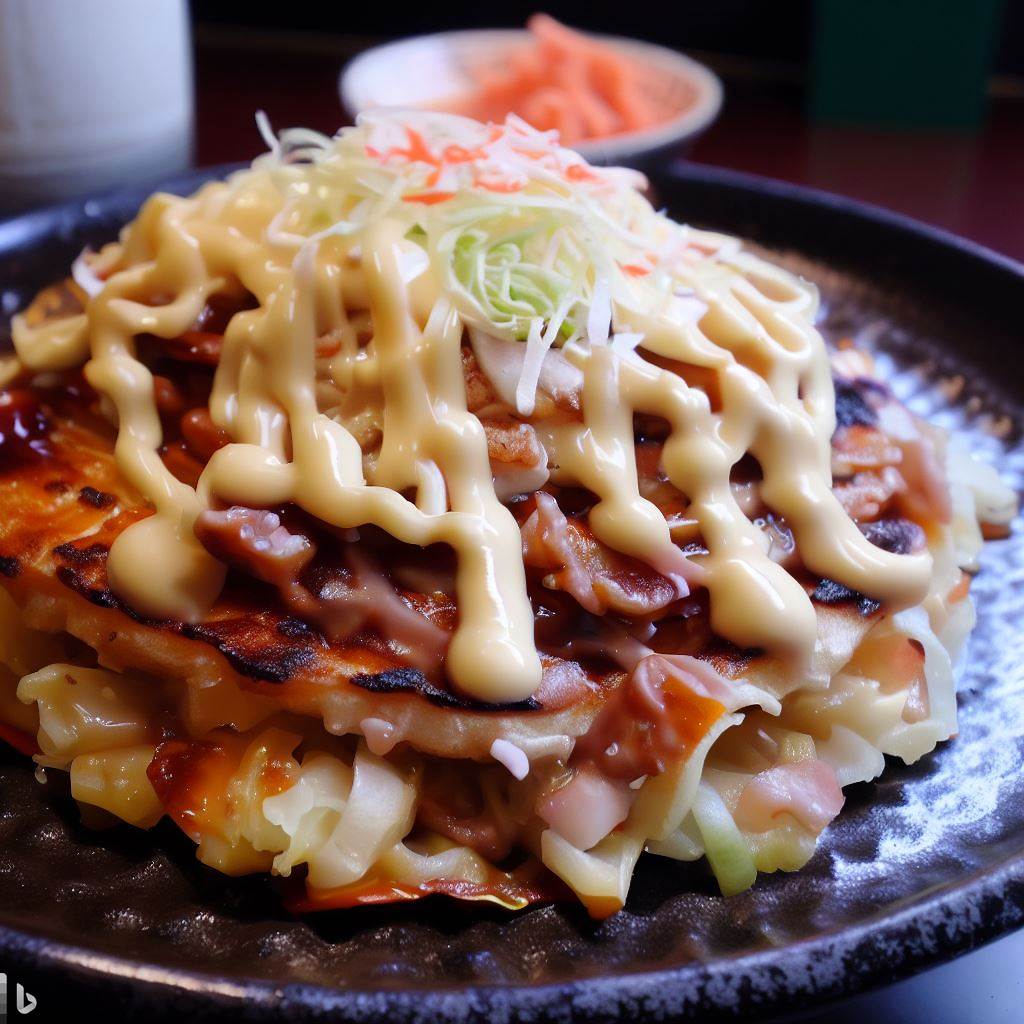
While flipping my Okonomiyaki, the spatula felt almost like a paintbrush. The layers of ingredients blended like colors on a canvas, inspiring me to put brush to paper. The result was a painting reflecting the harmony and diversity that Okonomiyaki represents.
Pescetarian Okonomiyaki Recipe: A Harmony of Flavors
Ingredients:
- For the Batter:
- 1 cup all-purpose flour
- 1 cup dashi (vegetable or fish-based)
- 1/4 teaspoon salt
- 1/4 teaspoon sugar
- 1/4 teaspoon baking powder
- 2 eggs, beaten
- For the Filling:
- 4 cups thinly sliced green cabbage
- 1/2 cup shredded carrots
- 4 green onions, thinly sliced
- 1/2 cup cooked and chopped shrimp (optional)
- 1/2 cup cooked and flaked squid (optional)
- For Cooking:
- 2 tablespoons vegetable oil
- 4 strips of cooked, sliced tempeh bacon (optional)
- For Toppings:
- Okonomiyaki sauce
- Japanese mayonnaise
- Aonori (seaweed flakes)
- Katsuobushi (bonito flakes)
- Pickled ginger
Instructions:
- Prepare the Batter: In a large mixing bowl, combine the all-purpose flour, dashi, salt, sugar, and baking powder. Whisk together until smooth. Add the beaten eggs and mix until fully incorporated.
- Mix the Filling: Add the thinly sliced cabbage, shredded carrots, green onions, and your choice of seafood to the batter. Gently fold the ingredients into the batter, ensuring everything is evenly coated.
- Cook the Okonomiyaki: Heat a large non-stick skillet over medium heat and add 1 tablespoon of vegetable oil. Once the oil is hot, pour half of the batter into the skillet, spreading it into a circular shape. If using tempeh bacon, place the strips on top of the batter.
- Flip and Cook: Cover and cook for about 5 minutes, until the bottom turns golden brown. Carefully flip the pancake using a spatula and cook the other side for another 5 minutes, or until it turns a nice golden color.
- Add Toppings: Remove the Okonomiyaki from the skillet and place it on a serving plate. Generously drizzle with Okonomiyaki sauce and Japanese mayonnaise. Sprinkle aonori, katsuobushi, and add some pickled ginger to taste.
- Repeat: Use the remaining batter and filling to make another Okonomiyaki pancake.
- Serve and Enjoy: Your Pescetarian Okonomiyaki is now ready! Slice it into wedges, share with loved ones, and savor the harmonious blend of flavors and textures.

Notes:
- For a vegetarian version, simply omit the seafood and replace it with more veggies or tofu.
- The toppings are optional but highly recommended for the authentic Okonomiyaki experience.
- You can find Okonomiyaki sauce, Japanese mayonnaise, aonori, and katsuobushi in most Asian grocery stores or online.
And in case you’re wondering how Gumbo felt about his bird-friendly take on Okonomiyaki—let’s just say he was harmoniously content with his miniature pancake, a tiny feast for my feathered friend.
In the world where mint feels cool and some food pairings universally please the palate, Okonomiyaki serves as a delicious canvas for cultural, historical, and personal expression. It’s more than just a meal; it’s a circle of life that spins on the axis of togetherness and harmony.
As they say in Japan, “Hara hachi bu”—eat until you’re eight parts full, but leave space for the soul to breathe. 🌿

 Bites & Bytes
Leave a comment