
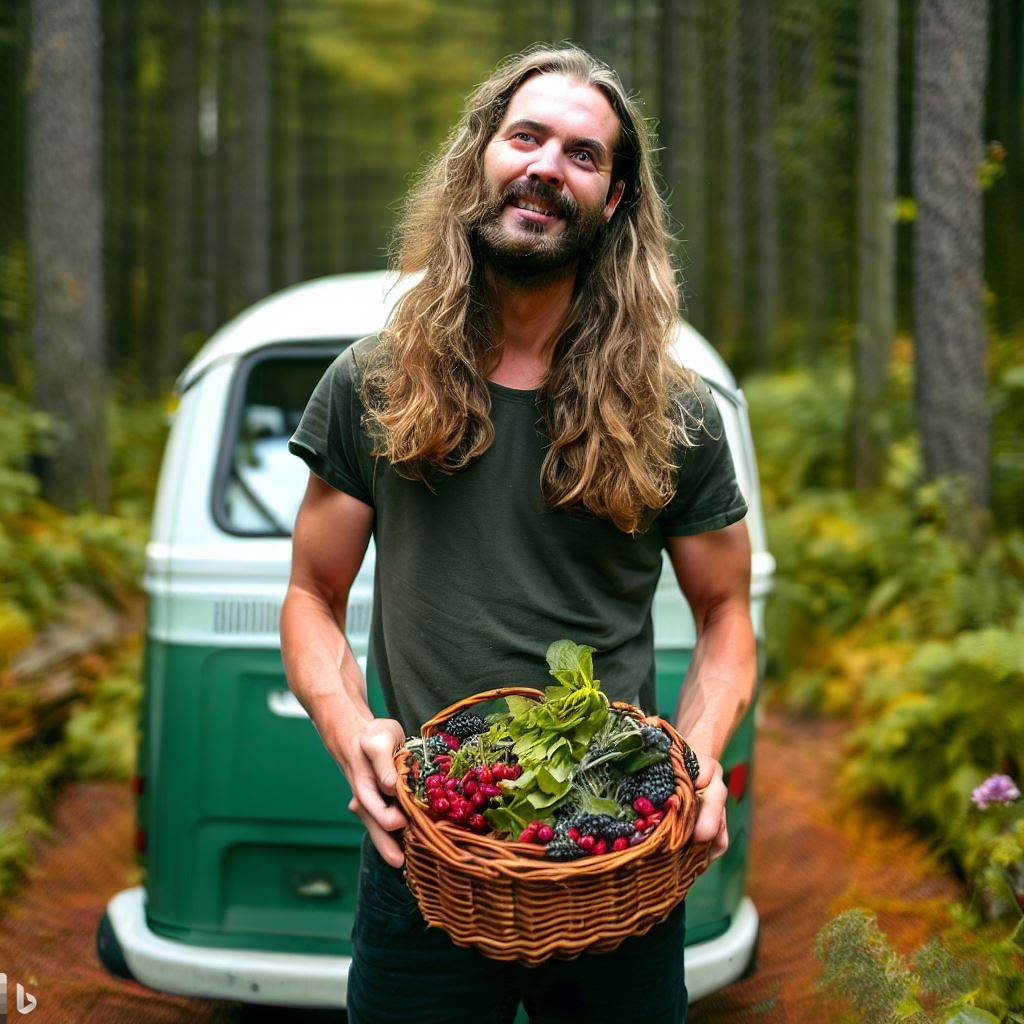
Ever stroll through the woods, eyeing those wild berries and mysterious mushrooms, and wonder if they could make it to your dinner plate? Well, let me take you on a gastronomic adventure you never knew your own backyard could offer. And guess what? You’ll be as kind to your palate as you are to Mother Earth.
The Symphony of Nature
Imagine walking through the forest, your boots gently crunching over fallen leaves. As you breathe in the clean, earthy air, you’re not just on a nature walk; you’re grocery shopping.
Years ago, my dear friend Hazel—this quirky, wisdom-infused botanist—introduced me to the world of foraging. And let me tell you, it was like having an extra set of taste buds installed! But as we were picking blueberries, Hazel told me about a community in Sweden where foraging is not just a fun weekend activity, it’s a lifestyle. Folks there are well-versed in living off the land, reducing their reliance on imported goods, and consequently, lowering their carbon footprint.
The Forest is a Pantry—But It’s Not All Gravy!
Here’s the rub: not everything you’ll find in the wild is dinner-worthy, let alone edible. I mean, some mushrooms would make you see a different kind of stars if you put them in your stew. So, it’s crucial to educate yourself on what’s good and what’s a no-go. Plus, sustainable foraging practices ensure that you’re not upsetting the natural balance. For instance, always leave the roots intact when you forage for plants. This way, they’ll continue to grow back, preserving the local ecosystem.
It’s Not Just About Free Food; It’s About Being Free
Foraging connects us not only to nature but to our ancestors. Think about it; before supermarkets, we were all foragers. And to make it a real blast from the past, you can preserve your finds by canning or fermenting. There’s something so liberating about not being completely dependent on store-bought food. Plus, you’ve cut out the middleman—Mother Nature delivers, literally!
Ingredients:
For the Salad:
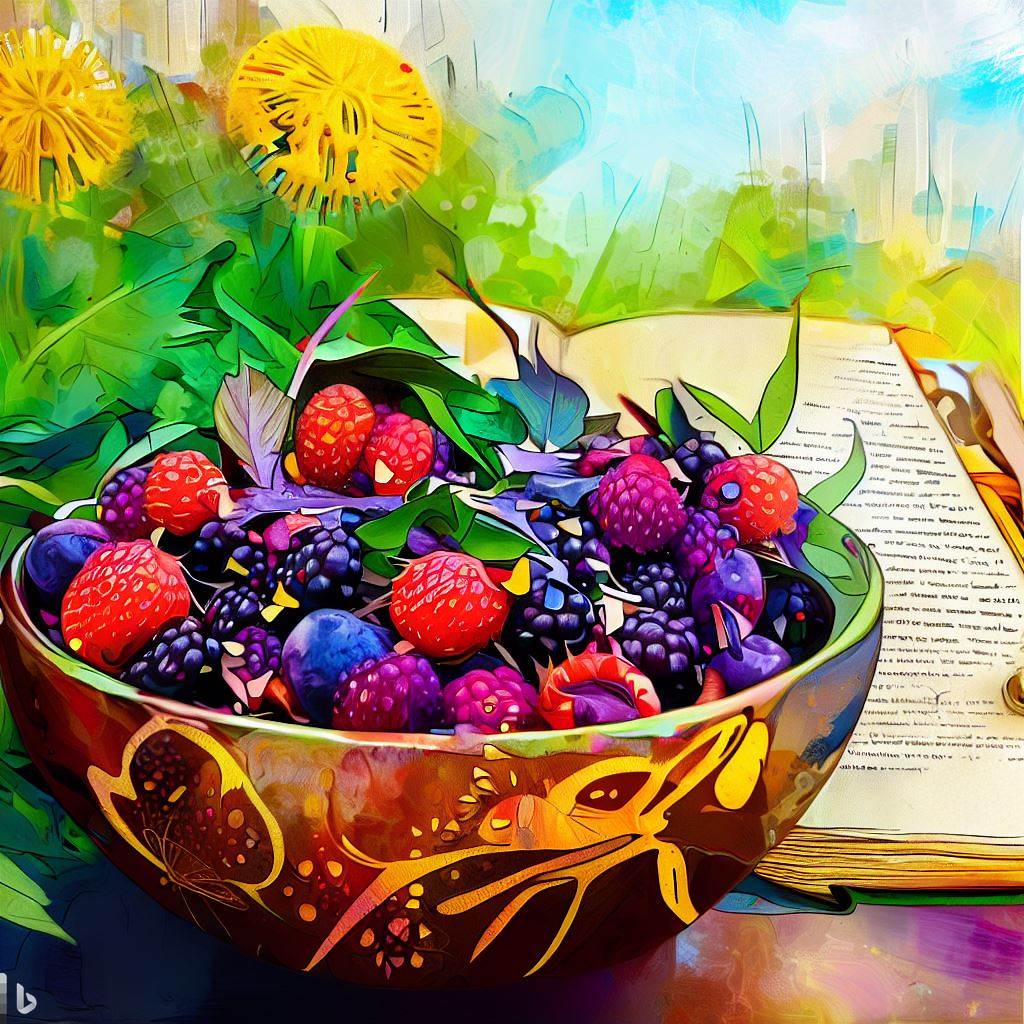
- 2 cups mixed wild berries (blackberries, blueberries, raspberries)
- 1 cup dandelion greens, washed and torn
- 1 cup baby spinach
- 1/2 cup walnuts, lightly toasted
- 1/4 cup feta cheese, crumbled
For the Dressing:
- 1/3 cup olive oil
- 2 tablespoons apple cider vinegar
- 1 tablespoon wild honey
- 1 teaspoon mustard
- 1 garlic clove, minced
- 1 tablespoon mixed foraged herbs (like wild mint, rosemary, or thyme)
- Salt and pepper to taste
Instructions:
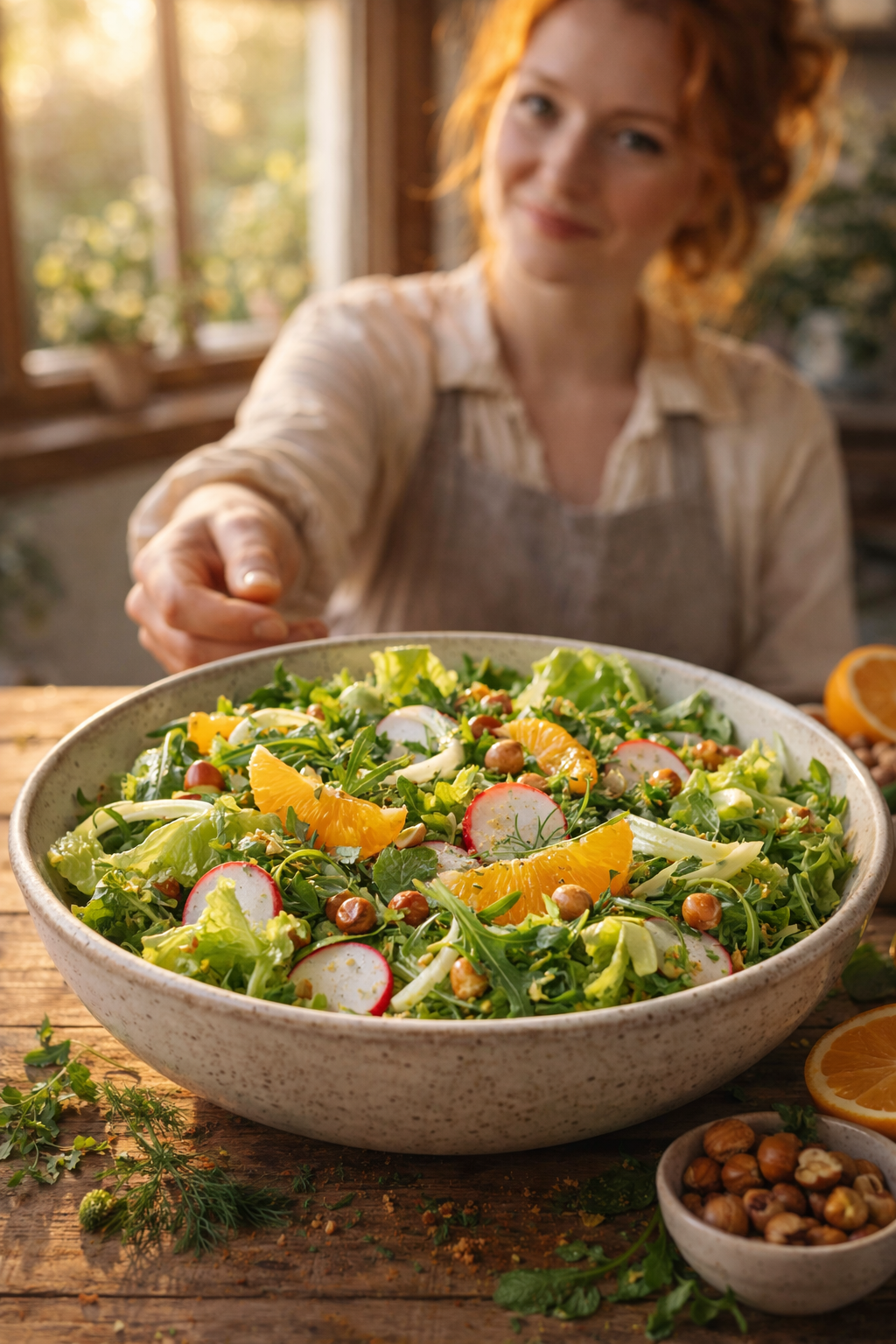
- In a large salad bowl, combine the wild berries, dandelion greens, and baby spinach. Toss them gently to mix.
- Place the walnuts in a dry pan over medium heat. Toast them for about 5-7 minutes or until they’re lightly browned and fragrant. Let them cool down a bit.
- In a jar with a lid, combine the olive oil, apple cider vinegar, wild honey, mustard, minced garlic, and mixed foraged herbs. Shake it well until the dressing emulsifies. Taste and adjust salt and pepper as needed.
- Add the toasted walnuts and crumbled feta cheese to the bowl with the berries and greens.
- Just before serving, drizzle the foraged herb dressing over the salad. Gently toss everything together, making sure the dressing evenly coats the salad ingredients.
Foraging doesn’t just connect you to your local environment; it’s a brilliant way to appreciate the cycle of life and seasons. Plus, those wild herbs and greens are not just tasty; they’re often denser in nutrients than their supermarket cousins. So, with each bite of this salad, you’re taking a bite out of a more sustainable, grounded lifestyle.

Taking Responsibility: Not Just a Trend, But a Way of Life
But let’s not forget, with great deliciousness comes great responsibility. In Vermont, the surge in popularity of ramps (wild leeks) led to its overharvesting, endangering the species. This is where community awareness and education come into play. Just as in Sweden, Vermonters are now actively spreading knowledge about responsible foraging, encouraging others to forage only what they can consume and leave behind enough for natural regeneration.
Foraging is not just about gathering food; it’s an experience that demands to be savored, like a good tune. So I’ve put together a Spotify playlist called “Groove While You Gather.” It’s a delightful blend of folk, rock, and chill vibes to accompany you on your foraging adventures.
What say you, kindred spirits? Are you ready to turn your next walk in the woods into an unforgettable feast?
And that’s a wrap for today, my culinary eco-warriors. Until next time, may your baskets be full and your footprints light.
 Bites & Bytes
Leave a comment