
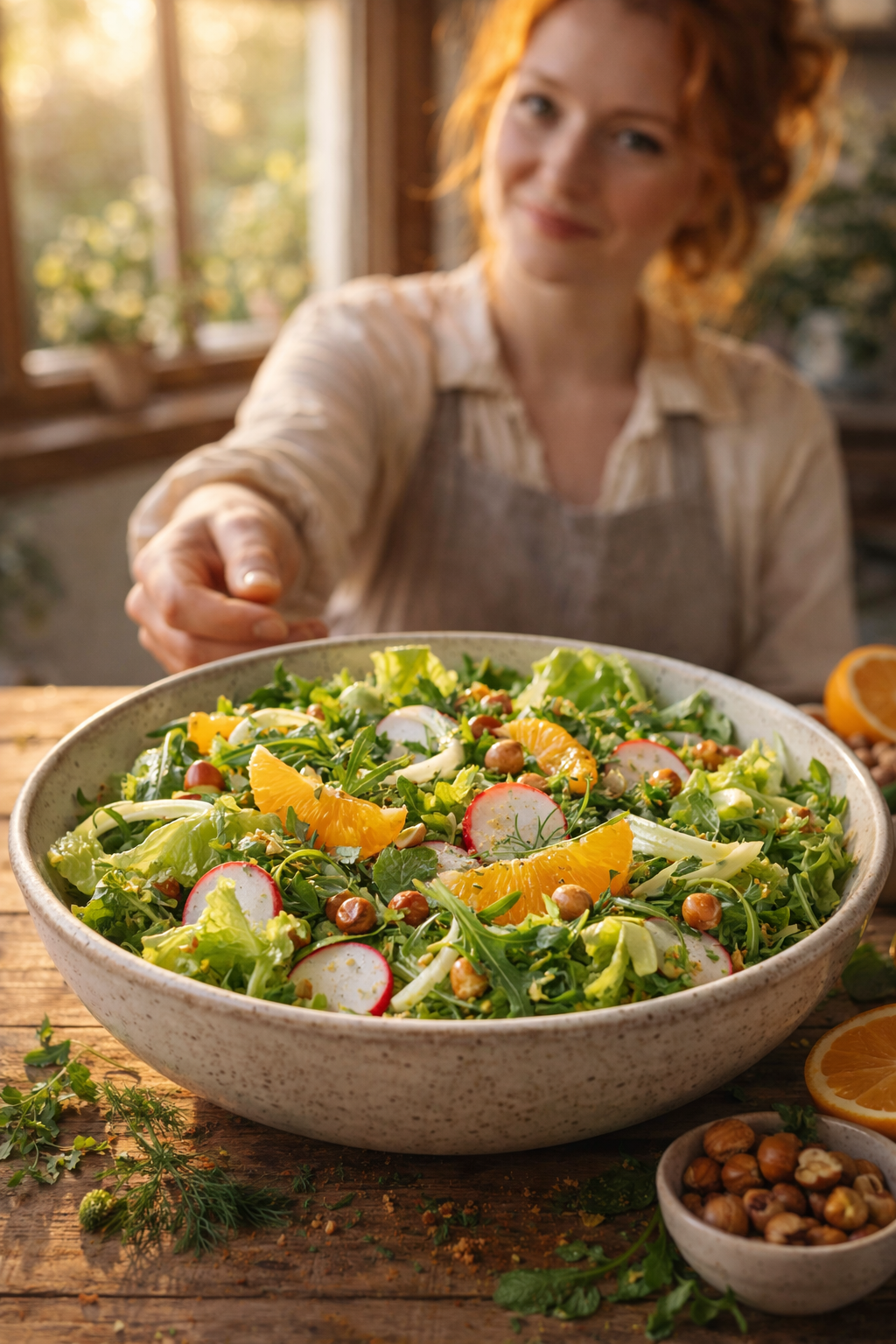
There is a particular kind of arrogance in dismissing salad.
I say this with love.
Somewhere along the way, salad became shorthand for obligation. The thing you eat before the real food arrives. The virtuous side character. The culinary equivalent of sensible shoes.
But if you’ve ever stood ankle-deep in a Maine spring garden, fingers stained green from snapping pea tendrils, you know better. Salad is not a prelude. Salad is a declaration.
Growing up by the sea, I learned early that freshness has a sound. It’s the snap of a cucumber just picked. The faint peppery perfume released when you tear arugula with your hands instead of slicing it. The whisper of sea wind bending wild sorrel toward the tide.
Salad, at its best, is not about restriction. It is about immediacy.
The Anthropology of Raw Things
Almost every culture has some form of dressed greens. In ancient Rome, leafy greens were often eaten with garum and oil. In Japan, quick-dressed cucumber salads balance rich grilled fish. Across the Levant, chopped herb salads are so verdant they look like edible meadows.
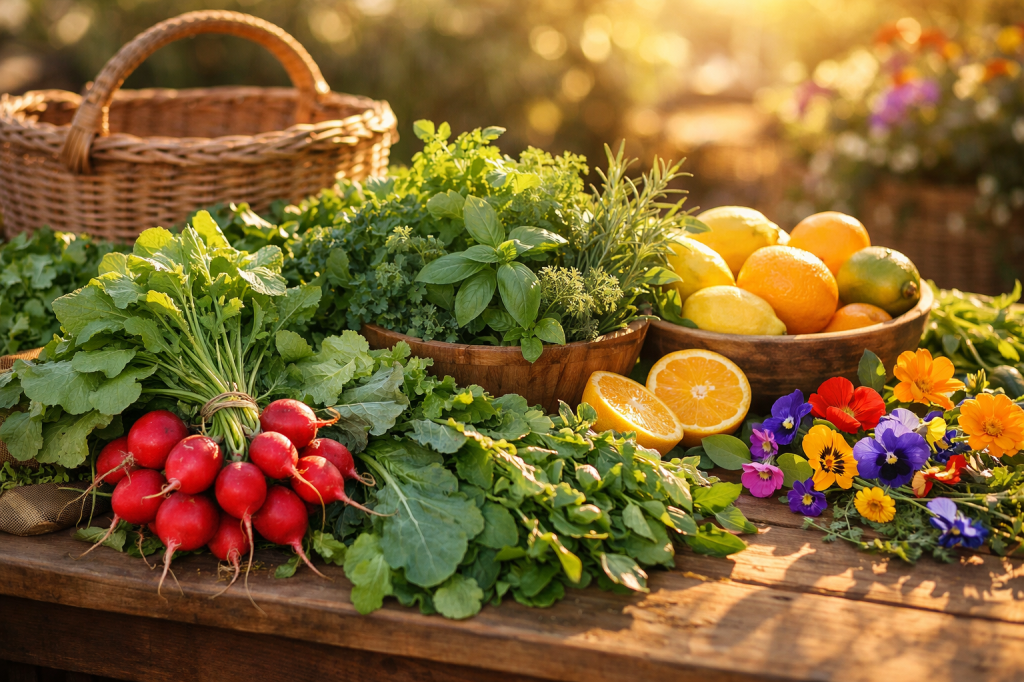
Raw vegetables are not modern inventions of wellness culture. They are ancient expressions of seasonality.
What fascinates me most is that salads tend to appear in climates where produce grows abundantly and quickly. When the earth offers something tender and fleeting, humans respond by not overcomplicating it. A squeeze of acid. A slick of oil. Salt. Perhaps a handful of herbs.
It’s culinary humility.
And yet, there is science humming quietly beneath that simplicity. Fat helps your body absorb fat-soluble vitamins like A, D, E, and K. Acid brightens flavor by stimulating salivation. Salt doesn’t just make things salty — it reduces bitterness in greens. Even the act of tearing leaves instead of chopping them minimizes bruising and oxidation.
Salad may look effortless. It is anything but accidental.
Why Mint Feels Cold (and Why It Belongs in Salad)
Allow me a brief Flavor Philosopher detour.
Mint contains menthol, which activates the same receptors in our skin that respond to cold temperatures. It doesn’t lower the temperature of your food — it simply persuades your brain that it has.
Pair mint with crisp greens and citrus, and suddenly a salad feels like standing barefoot in morning dew.
This is not coincidence. Many traditional cuisines pair cooling herbs with warm climates and warming spices with colder regions. Food reflects environment — sometimes directly, sometimes psychologically.
When I studied abroad in Japan, I fell in love with the restrained elegance of sesame-dressed greens. Back home in Maine, I began pairing sea salt with tender lettuces and shaved fennel, chasing that same balance of ocean and garden.
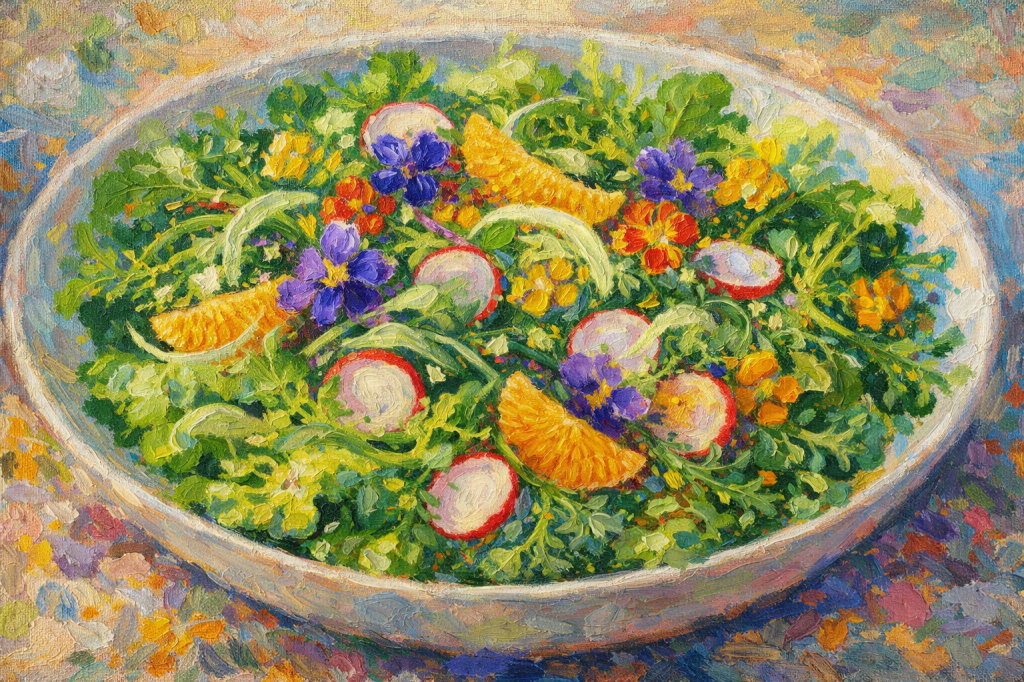
Some afternoons, when the light is particularly theatrical, I find myself painting the salad before I eat it. Broad strokes of viridian, splashes of coral radish, the pale ivory of fennel arcs. Impressionism was never meant for stew alone.
The Structure of a Salad That Sings
A transcendent salad is architectural.
You need:
- Tender greens (butter lettuce, arugula, baby kale)
- Crunch (toasted seeds, nuts, shaved vegetables)
- Acid (citrus, vinegar, pickled elements)
- Fat (olive oil, tahini, avocado, cheese)
- Salt (flaky sea salt changes everything)
- Surprise (fresh herbs, fruit, something unexpected)
Texture is as important as taste. Our brains register crunch as freshness. Bitterness signals nutrients. Bright acidity wakes up the palate.
And please — dress your salad just before serving. Salt draws water from leaves through osmosis. Wait too long, and you’ll have a bowl of regret.
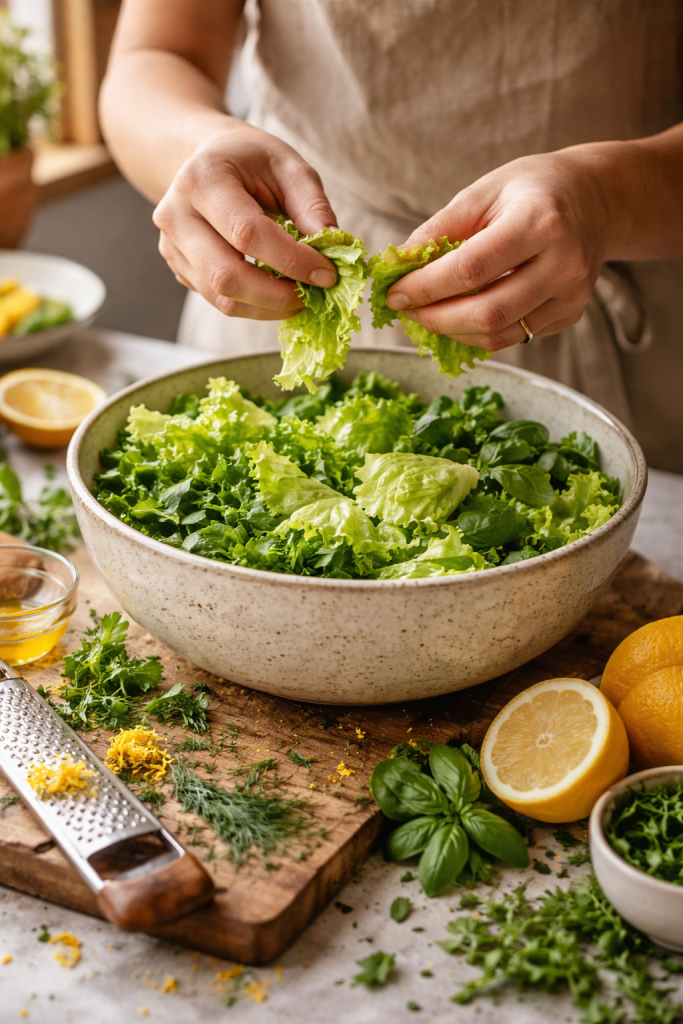
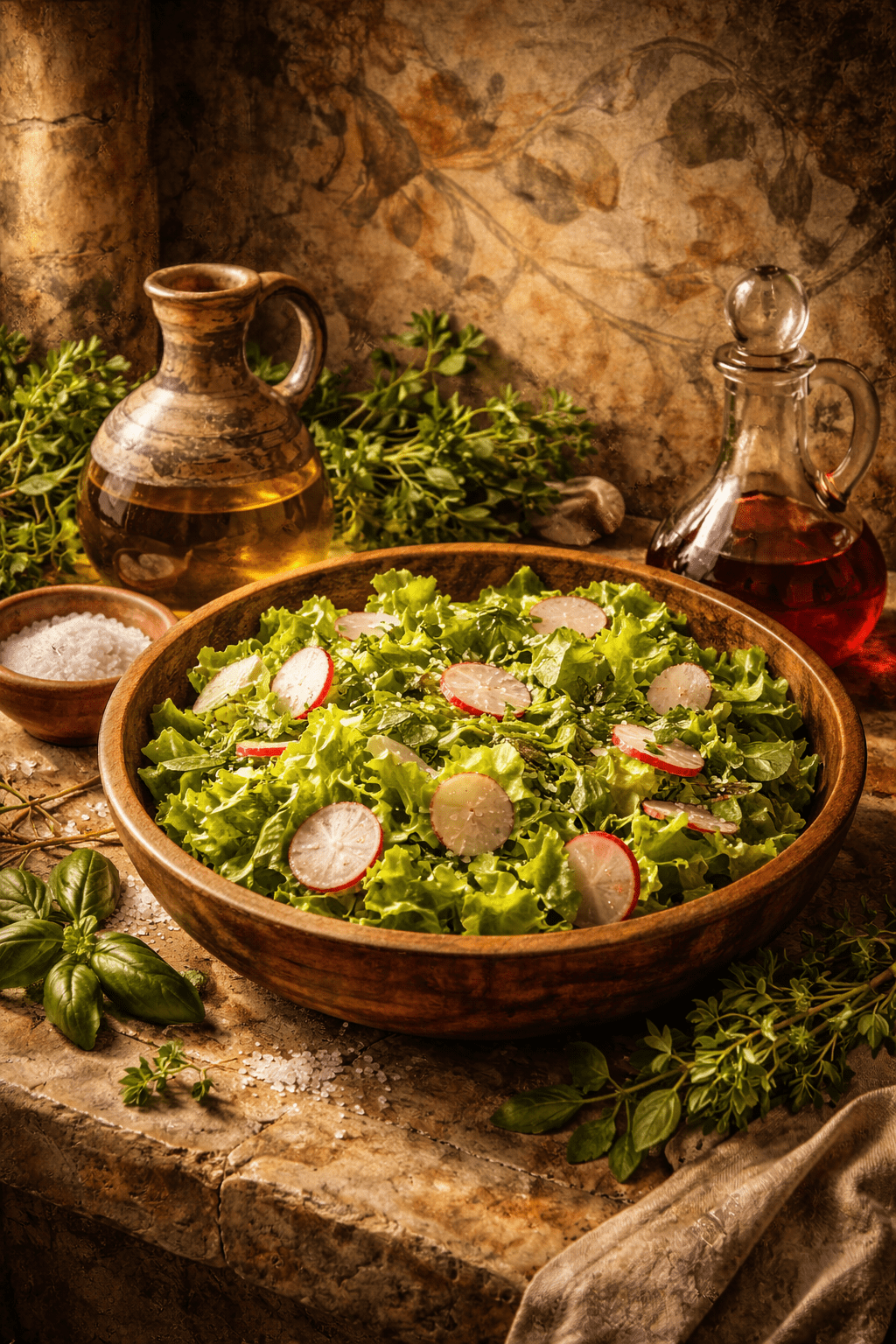
Today’s Bowl: Maine Spring Garden Salad with Citrus, Fennel & Toasted Hazelnuts
Serves 4 as a main, 6 as a side
Bright, textural, herbaceous — the kind of salad that tastes like windows thrown open after a long winter.
Ingredients
For the Salad:
- 4 cups tender butter lettuce, gently torn
- 2 cups baby arugula
- 1 small fennel bulb, shaved very thin (reserve fronds)
- 3–4 radishes, sliced paper-thin
- 1 large orange (or 2 mandarins), segmented
- ¼ cup toasted hazelnuts, roughly chopped
- 2 tablespoons fresh mint leaves, torn
- 2 tablespoons fresh dill, lightly chopped
- Flaky sea salt, to finish
Optional but Lovely Additions:
- 2 ounces soft goat cheese or shaved pecorino
- A small handful of edible flowers (if you’re feeling theatrical)
For the Citrus-Shallot Vinaigrette:
- 3 tablespoons fresh orange juice
- 1 tablespoon fresh lemon juice
- 1 teaspoon finely minced shallot
- 1 teaspoon Dijon mustard
- ¼ cup extra virgin olive oil
- ½ teaspoon honey (optional, depending on citrus sweetness)
- Fine sea salt and freshly cracked black pepper, to taste
Instructions
1. Toast the Hazelnuts
If your hazelnuts aren’t already toasted, spread them on a baking sheet and toast at 350°F (175°C) for 8–10 minutes, until fragrant. Rub them in a clean kitchen towel to remove most of the skins, then chop coarsely. Set aside to cool.2. Make the Vinaigrette
In a small bowl, whisk together orange juice, lemon juice, minced shallot, and Dijon. Slowly drizzle in the olive oil while whisking to emulsify. Add honey if your citrus needs softening. Season with salt and pepper. Taste. Adjust. The dressing should feel bright but rounded.Let it sit for 5–10 minutes so the shallot mellows slightly.
3. Build the Base
In a large, wide bowl (give your greens room to breathe), combine butter lettuce and arugula. Add shaved fennel, radishes, and orange segments. Scatter in most of the herbs, reserving a pinch for the top.4. Dress with Intention
Drizzle just enough vinaigrette to lightly coat — start with half and toss gently with your hands. Yes, hands. They are gentler than tongs and far more intuitive.Taste a leaf. Add more dressing only if needed. Salad should be kissed, not drowned.
5. Finish with Texture & Salt
Scatter toasted hazelnuts over the top. Add cheese if using. Sprinkle with flaky sea salt — not too much, just enough to make everything sparkle.Finish with fennel fronds and the remaining herbs.
Serve Immediately
Salad waits for no one.
Serve alongside grilled fish, crusty bread, or eat it as it is — standing at the counter, sunlight on your shoulder, feeling vaguely like you’ve done something noble for your body and your spirit.
Notice how the fennel’s anise sweetness hums against the citrus. How the hazelnuts ground the brightness. How the mint tricks your senses into thinking there’s a cool breeze even if you’re nowhere near the coast.
And if you find yourself tearing another leaf just to taste it plain before dressing — that’s how you know you’ve chosen good greens.
When I made this salad last week, Gumbo supervised from his perch by the window, offering strong opinions about the fennel fronds. (He prefers mango. He always prefers mango.) He tilted his emerald head while I shaved fennel paper-thin, sunlight igniting the translucent edges.
There’s something deeply hopeful about assembling a salad. It requires no long simmer, no braise, no transformation by fire. It asks only that you notice what is already alive.
In a world that often feels overcooked, that feels radical.
Salad is not restraint. Salad is attention.
As the Persian proverb says:
“He who has health has hope; and he who has hope has everything.”
And sometimes, hope looks like a bowl of leaves — dressed well, eaten slowly, and shared generously. 🌿✨
 Bites & Bytes
Leave a comment