
There was a time in my early twenties when I believed salad was punishment. A bowl of limp lettuce. A sad tomato wedge. A drizzle of something aggressively “low-fat.” It felt like an apology for wanting flavor.
Then I started hiking longer distances—real calf-burning, lungs-wide-open treks—and cooking most of my meals from scratch. Something shifted. I began craving greens not because I “should,” but because my body genuinely wanted them. I realized salad isn’t a side dish. It’s a philosophy.
Salad is possibility.
It’s also one of the most climate-friendly, nutrient-dense, adaptable meals we can make—and it doesn’t have to feel like chewing through a lawn.
A few summers ago, I was volunteering at a community garden just outside town. We had a plot near a busy road, and one afternoon a kid pointed at the lettuce and asked, “How can that grow here?” The air wasn’t pristine. The soil had needed serious remediation. But with compost, cover crops, and a little microbial magic, that patch of ground produced some of the most vibrant greens I’ve ever tasted. It was a quiet reminder that soil—like people—responds to care. And when we choose to eat plants grown thoughtfully, we participate in that restoration.
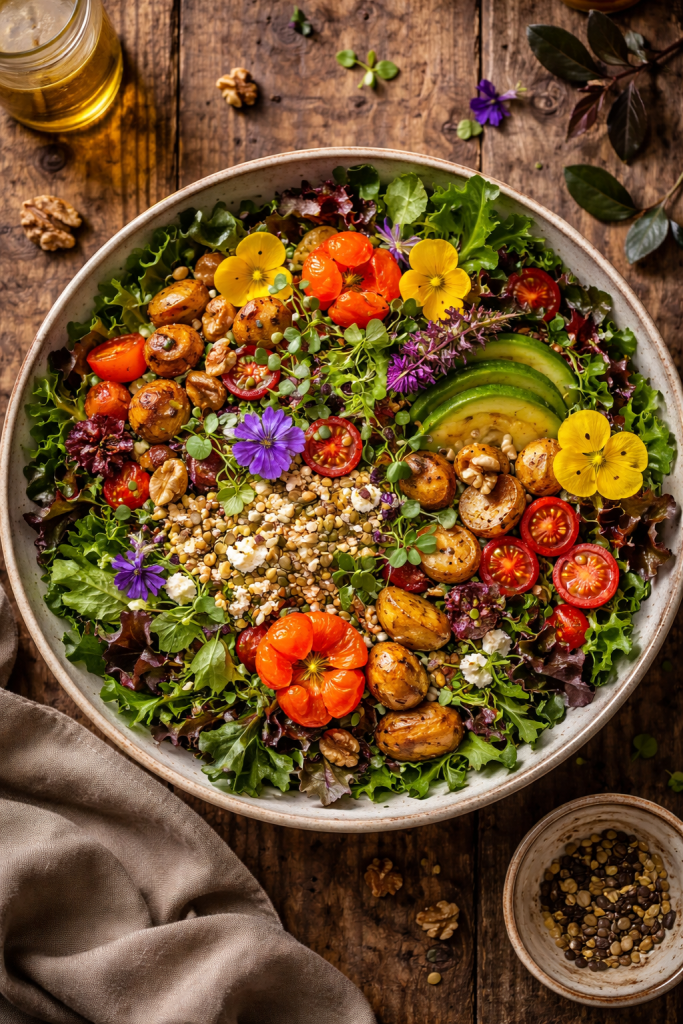
Here’s the thing about salad: leafy greens require significantly less land and water than animal proteins. Producing a pound of beef can require thousands of gallons of water, while many leafy greens grow in a fraction of that. Lentils and chickpeas, which I often toss into my salads, fix nitrogen in the soil as they grow—meaning they actually improve soil fertility rather than deplete it. When we build a salad around diverse plants—greens, herbs, grains, seeds—we’re not just feeding ourselves. We’re supporting biodiversity.
And biodiversity matters. Monocropping—growing vast fields of a single plant—can deplete soil nutrients and invite pests that then require chemical interventions. A mixed salad bowl is like a tiny edible rebellion against that system. Different textures. Different colors. Different root structures. Diversity on your fork.
Plus, let’s talk nutrition for a moment. Dark leafy greens like kale and spinach are rich in vitamin K and folate. Carrots and sweet potatoes bring beta-carotene to the party. Nuts and seeds offer healthy fats that help your body absorb fat-soluble vitamins. A well-constructed salad isn’t rabbit food. It’s a biochemical symphony.
Let me tell you about the day I truly fell in love with salad.
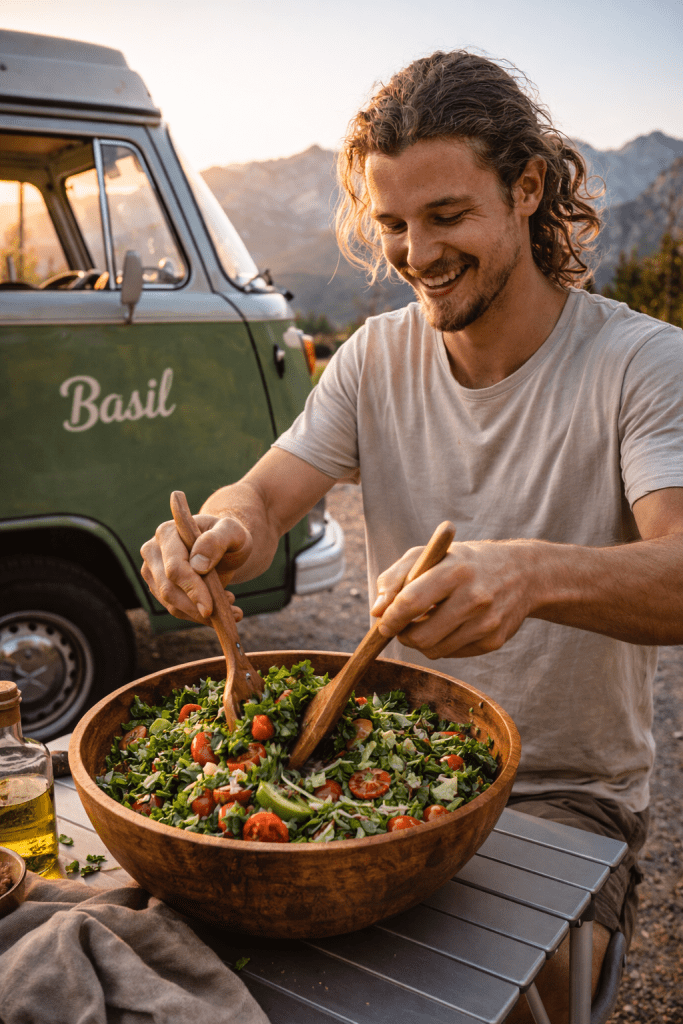
I was parked beside Basil—my green vintage VW van—at the edge of a trailhead after a long morning hike. I had a cooler packed with leftover roasted vegetables, a jar of homemade dressing, and a container of farro. I tossed everything together on a camp table with a handful of wild arugula growing nearby (foraged responsibly, just a few leaves). That bowl tasted like sunlight and sweat and gratitude. It felt earned.
Salad, when done right, is deeply satisfying because it honors contrast. Crunch against creaminess. Acid against sweetness. Raw against roasted. It’s geology on a plate—layers, textures, pressure transformed into beauty. The same forces that build mountains build flavor when we’re patient.
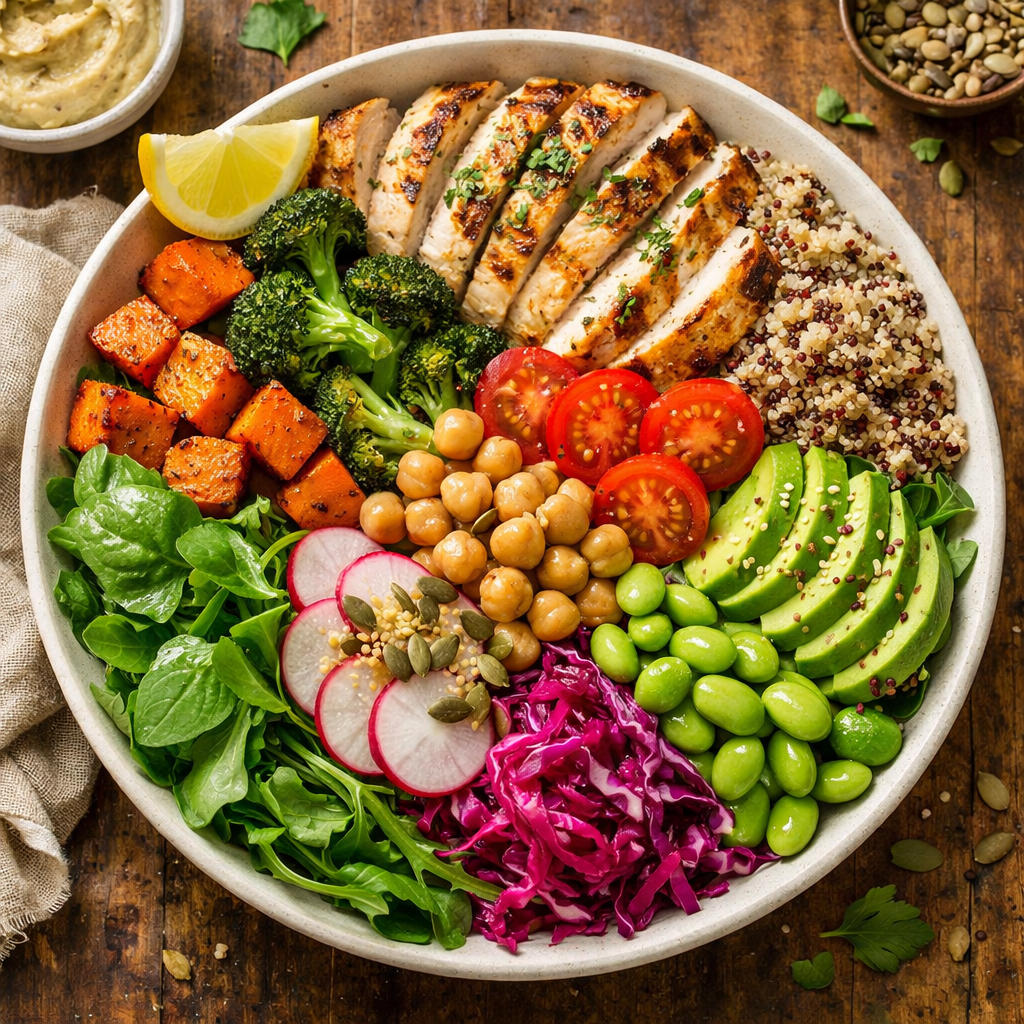
And here’s the sustainability kicker: salads are champions of leftovers. Roasted veggies from last night? In. That last scoop of quinoa? In. Half an avocado threatening to brown? Definitely in. Food waste accounts for nearly a third of all food produced globally. When we design meals that eagerly welcome stragglers from the fridge, we interrupt that waste stream.
Even the dressing can be a climate act. Olive oil, mustard, vinegar, a spoonful of yogurt, herbs from the windowsill—no plastic bottle required. Homemade dressings cut down on packaging waste and often contain fewer stabilizers and added sugars.
So let’s build a salad that feels like a main event. One that’s hearty enough to anchor your evening and bold enough to convert skeptics.
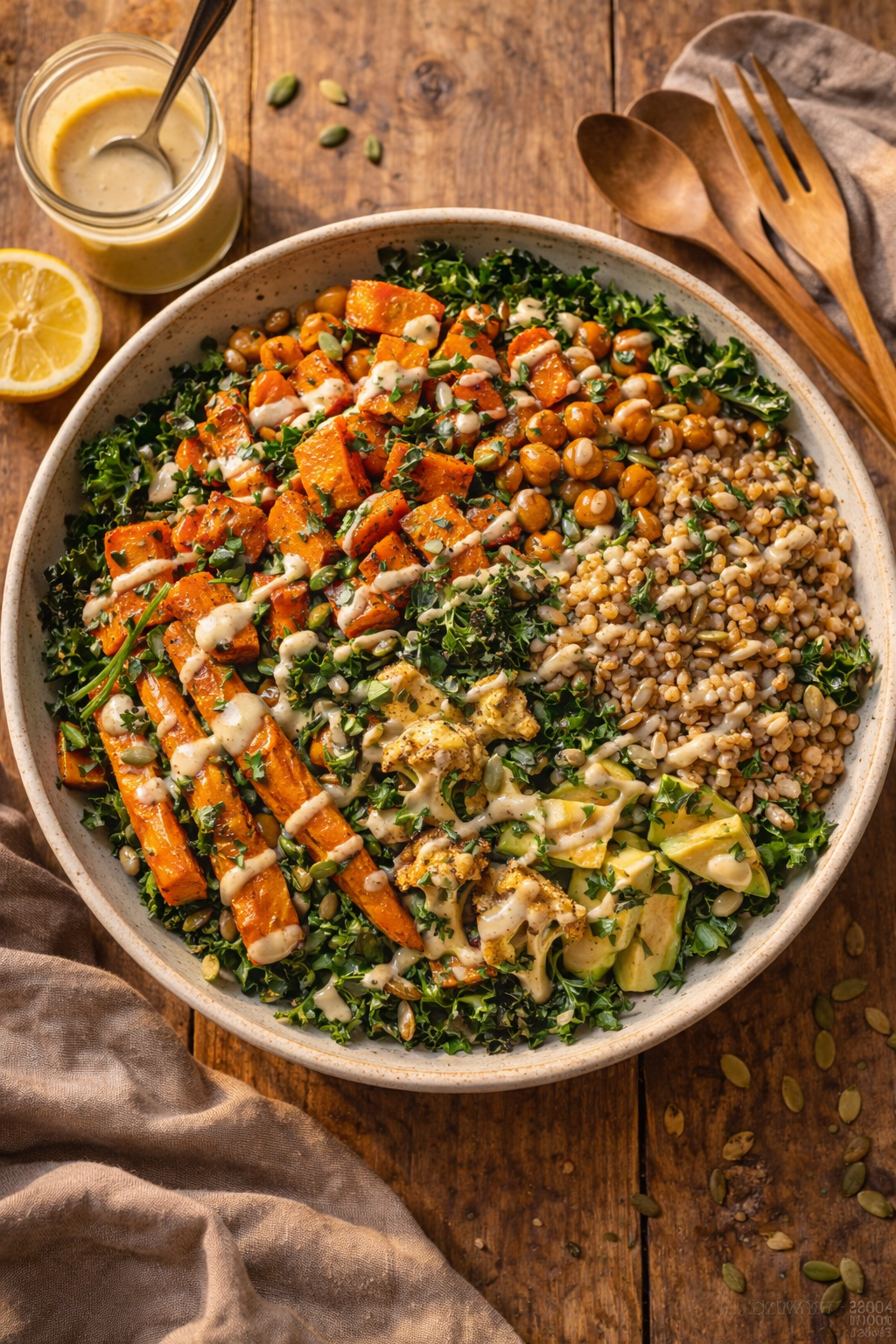
Roasted Harvest Grain Salad with Lemon-Tahini Drizzle
Serves 4 generously (or 2 very hungry hikers parked beside a green van)
Ingredients
For the roasted vegetables:
- 2 carrots, sliced into coins
- 1 medium sweet potato, diced into small cubes
- 1 red onion, cut into wedges
- 1 zucchini, sliced
- 1 cup broccoli florets
- 2 tablespoons olive oil
- 1 teaspoon smoked paprika
- ½ teaspoon ground cumin
- Salt and freshly cracked black pepper
For the grain base:
- 1 cup farro (or quinoa for gluten-free), uncooked
- 3 cups water or vegetable broth
- Pinch of salt
For the salad assembly:
- 3 cups chopped kale (stems removed)
- 1 can chickpeas, drained and rinsed
- ¼ cup toasted pumpkin seeds
- ¼ cup chopped fresh parsley
- Optional: a handful of arugula or spinach
- Optional: crumbled feta or a scoop of plain yogurt
For the lemon-tahini drizzle:
- ¼ cup tahini
- Juice of 1 large lemon
- 1 small garlic clove, finely grated
- 2–4 tablespoons warm water (to thin)
- 1 tablespoon olive oil
- Salt to taste
Instructions
- Roast the vegetables.
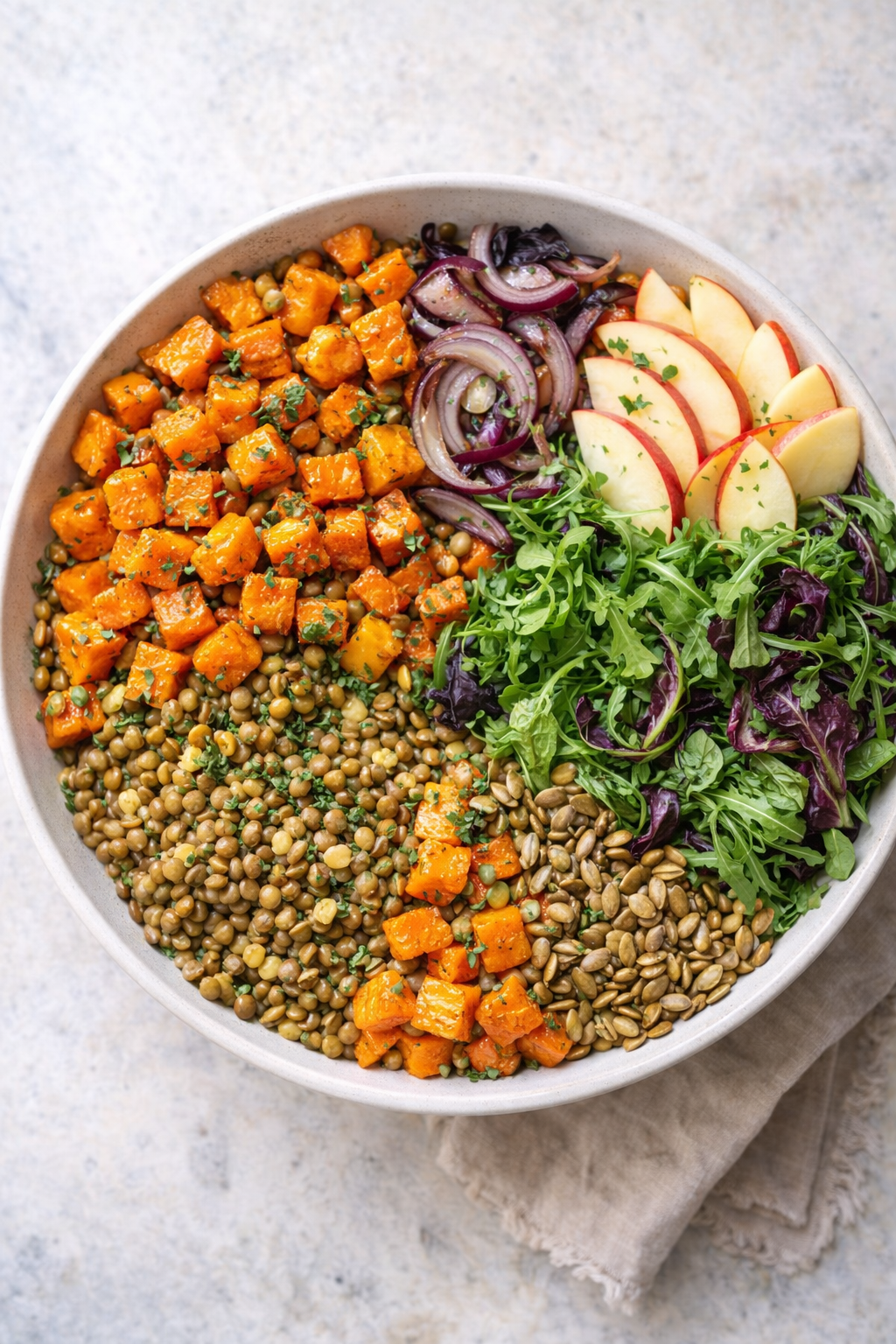
Preheat your oven to 400°F (200°C). Spread the carrots, sweet potato, red onion, zucchini, and broccoli on a large baking sheet. Drizzle with olive oil, sprinkle with smoked paprika, cumin, salt, and pepper, then toss with your hands until everything is coated. Roast for 25–30 minutes, flipping once, until caramelized at the edges and tender in the center.Roasting concentrates flavor and rescues vegetables that are slightly past their prime. Those bendy carrots in the crisper drawer? This is their redemption arc.- Cook the grain.
While the vegetables roast, rinse the farro under cool water. Bring water or broth to a boil with a pinch of salt. Add the farro, reduce to a gentle simmer, and cook for about 25–30 minutes (quinoa will take about 15). Drain any excess liquid and let it cool slightly.Whole grains like farro provide fiber and slow-burning energy, and compared to heavily processed grains, they require less industrial refinement. Fewer steps, less energy, more nutrition.- Massage the kale.
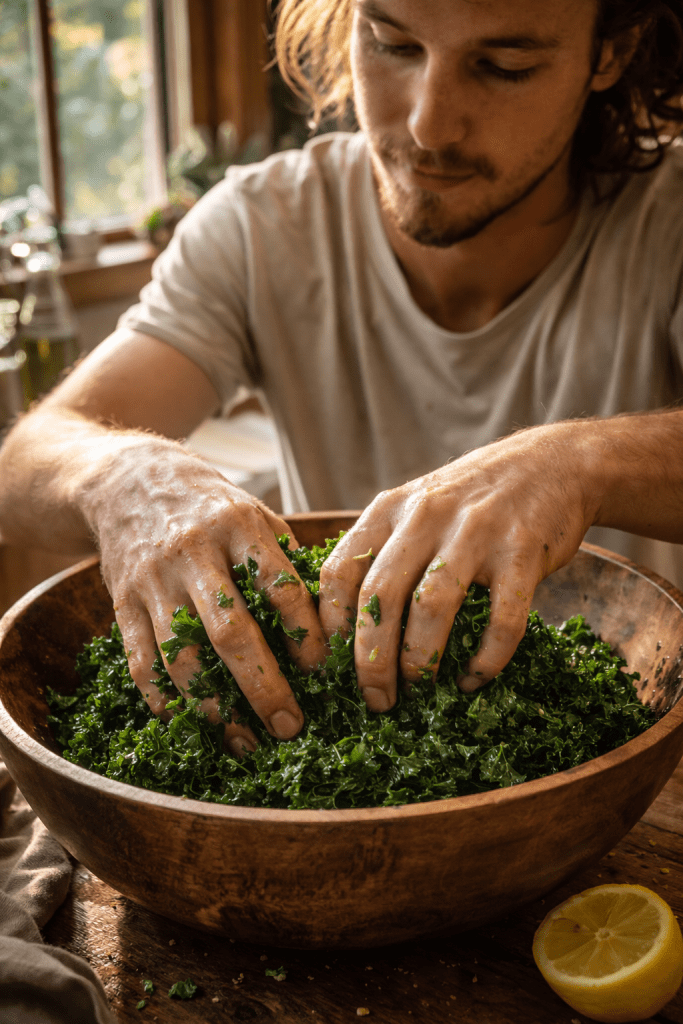
Place the chopped kale in a large bowl with a small drizzle of olive oil and a squeeze of lemon. Massage it with your hands for about 1–2 minutes until it softens and turns a deeper green. This breaks down the fibrous structure and makes it tender rather than chewy.It’s a tiny act of transformation—pressure turning something tough into something supple. Nature does it over millennia. We do it in a mixing bowl.- Make the lemon-tahini drizzle.
In a small bowl, whisk together tahini, lemon juice, garlic, olive oil, and salt. Add warm water a tablespoon at a time until it reaches a pourable consistency. It should be creamy but not stiff.Tahini brings plant-based richness and healthy fats that help your body absorb nutrients from those bright vegetables.- Assemble the salad.
To the bowl with the kale, add the cooked farro, roasted vegetables, chickpeas, parsley, and optional greens. Toss gently to combine. Sprinkle with toasted pumpkin seeds for crunch.- Finish and serve.
Drizzle generously with lemon-tahini sauce. Add feta or yogurt if using. Taste and adjust salt or lemon as needed.Serve warm or at room temperature. It keeps beautifully in the fridge for up to three days, making it a quiet hero of weekday lunches and reducing the temptation to reach for something packaged and forgettable.
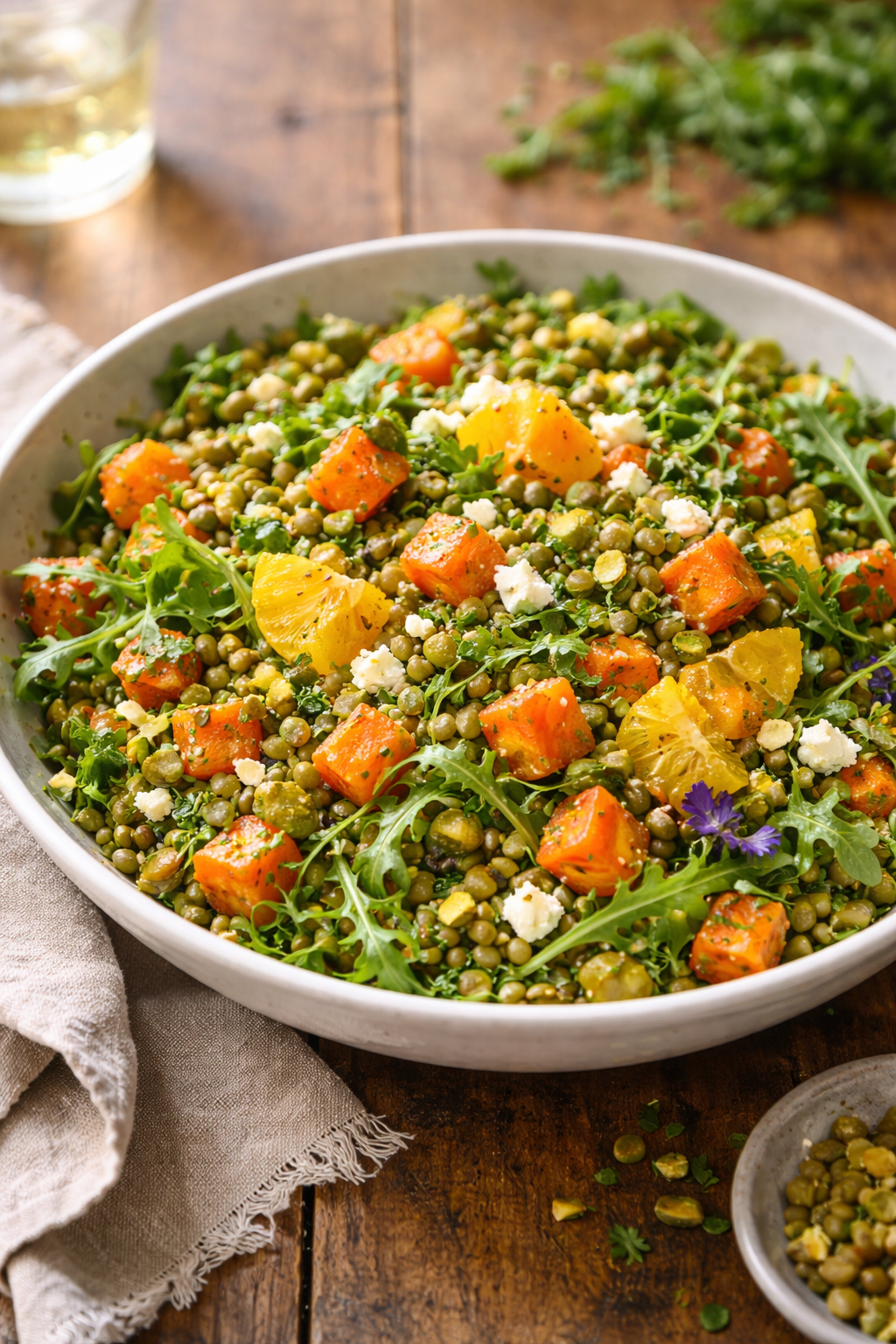
Each forkful carries roasted sweetness, bright acidity, creamy depth, and nutty crunch. It’s hearty enough to anchor your evening, flexible enough to welcome leftovers, and kind enough to the planet that you can savor it with a little extra joy.
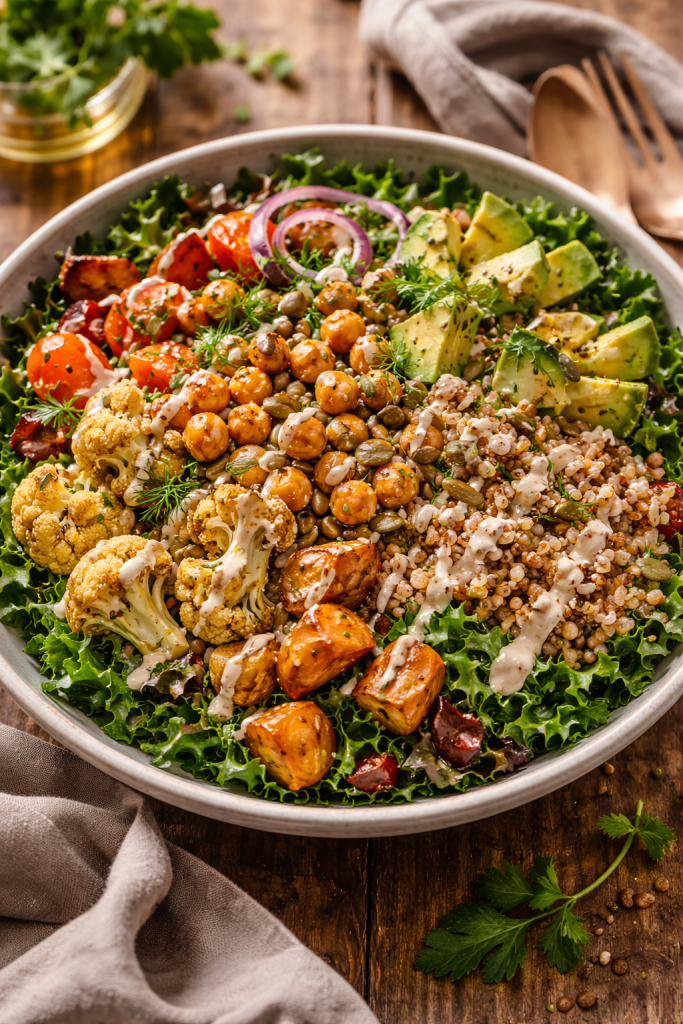
When you assemble a bowl like this, you’re doing more than feeding yourself. You’re supporting farmers who rotate crops. You’re reducing reliance on resource-intensive foods. You’re choosing ingredients that often travel shorter distances when sourced seasonally. You’re participating in a quieter, steadier food system.
There’s also something emotionally grounding about chopping vegetables. The rhythm of the knife. The scent of fresh herbs released under your fingers. In a world that moves at notification speed, salad insists on presence.
And let’s not forget the microbiome—both in your gut and in the soil. Fiber from plants feeds beneficial gut bacteria, which in turn influence everything from digestion to immune response. Healthy soil teems with microorganisms that help plants absorb nutrients and store carbon. There’s a poetic symmetry there. We thrive when the soil thrives.
So next time someone dismisses salad as boring, I want you to grin knowingly. Salad is not deprivation. It’s design. It’s resilience. It’s color theory and soil science and culinary creativity all tangled together in one generous bowl.
Make it loud. Make it seasonal. Make it yours.
And while you toss those greens, cue up my Spotify playlist for this post:
Playlist: “Leaves, Roots & Grooves”
Here’s to big bowls, bold flavors, and a planet that feels a little lighter when we choose plants first. 🌿🥗
 Bites & Bytes
Leave a comment