
You know the drill. You’re in your favorite Mexican restaurant, eyeing the salsa bar like it holds the secrets of the universe. There’s mild, there’s hot, there’s “are-you-sure-you-want-to-try-that” level heat. Ah, chiles—the darlings of spice aficionados and the bane of the uninitiated. But what if I told you that the humble chile pepper, often relegated to the role of mere seasoning, is a powerhouse of sustainability and health benefits? Buckle up, amigo. We’re diving into a topic as hot as the peppers themselves.
First, let’s talk flavor profiles. Chiles have them in spades—smoky, sweet, fruity, you name it. No wonder they’re a cornerstone in various cuisines from Thai to Tex-Mex. The spiciness? That’s courtesy of a compound called capsaicin, which is interestingly an irritant for mammals but not for birds. Birds are immune to the heat and happily gobble down chiles, eventually depositing the seeds far and wide. It’s nature’s own delivery service, free of charge. This is probably why chile plants are excellent for polyculture farming systems, offering biodiversity while happily co-existing with other plants.

You may think of chiles as exotic, but they’ve actually been cultivated for over 6,000 years in the Americas. Nowadays, they’re so integral to diets worldwide that they’ve become one of the top traded spice crops globally. And here’s a nugget of knowledge—compared to tomatoes, chiles require less water to grow, making them a sustainable alternative in arid regions.
But enough with the agricultural chit-chat. Let’s get to the exciting stuff—the health benefits! Capsaicin isn’t just a party trick to test your tolerance level; it’s known for its medicinal properties, including its ability to boost metabolism and promote fat loss. And for those feeling adventurous in the DIY skincare realm, it’s an active ingredient in creams to relieve pain.
I was hiking up the San Juan mountains last summer and stumbled upon a native species of wild chiles. It dawned on me that these fiery pods are more than just tongue-burning dare material. They’re part of an ecosystem, a culture, and they even lend themselves to artistic culinary expressions, like the mouth-watering chile relleno recipe I’ve got below.
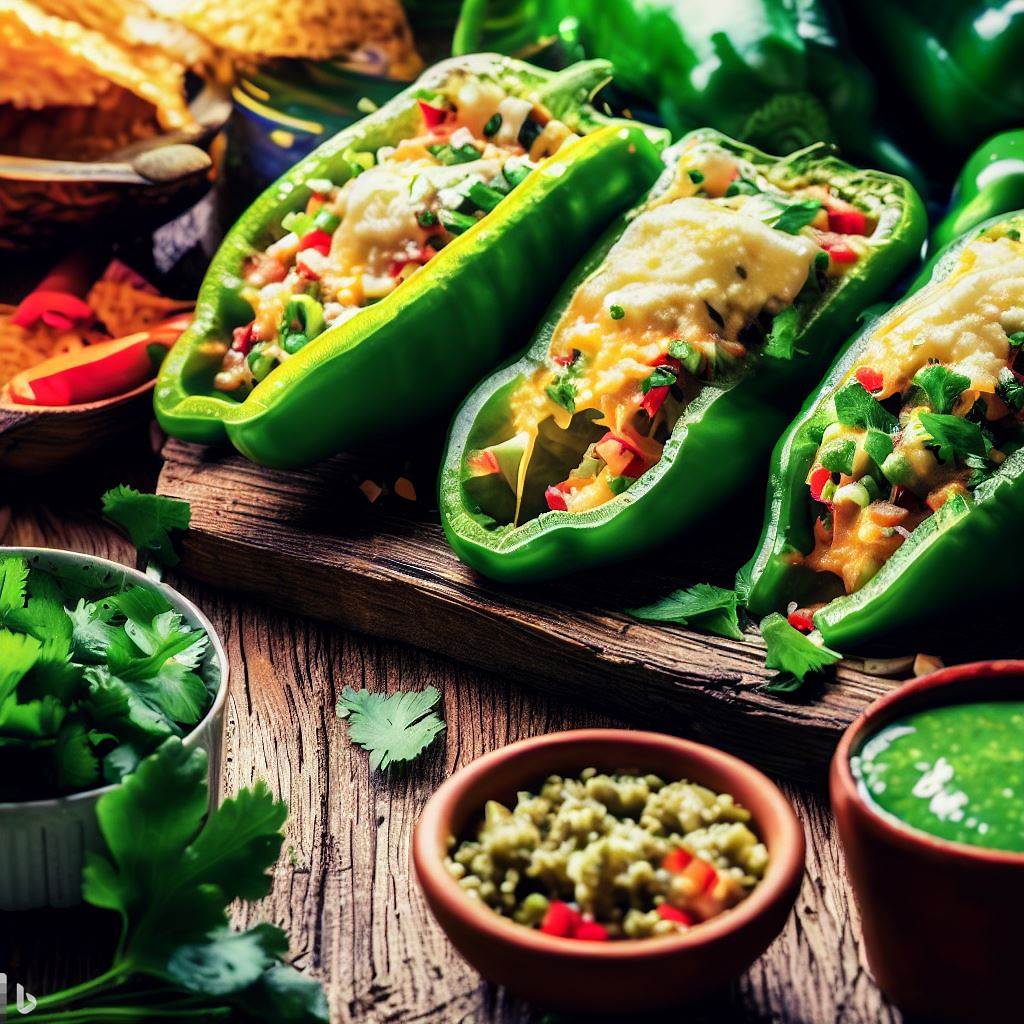
Stuffed Poblano Peppers: A Chile Relleno Odyssey
Ingredients:
- 4 large poblano peppers
- 1 cup cooked quinoa or rice
- 1 can black beans, drained and rinsed
- 1 cup corn kernels (fresh or frozen)
- 1 cup shredded cheese (cheddar, Monterey Jack, or a blend)
- 1 small red onion, finely chopped
- 1 tomato, diced
- 2 cloves garlic, minced
- 1 teaspoon ground cumin
- 1 teaspoon paprika
- Salt and pepper to taste
- 1 tablespoon olive oil
- 1 cup salsa verde
- Fresh cilantro leaves for garnish
- Lime wedges for serving
Instructions:
- Roast the Poblanos: Preheat your oven to 400°F (200°C). Place the poblano peppers on a baking sheet and roast them for about 20-25 minutes, turning halfway through, until the skin is charred and blistered. Remove from oven and let them cool.
- Prep the Filling: While the peppers are cooling, prepare your filling. In a large bowl, mix together the cooked quinoa or rice, black beans, corn, half of the shredded cheese, chopped red onion, diced tomato, minced garlic, ground cumin, paprika, salt, and pepper. Drizzle olive oil and give it a good mix.
- Peel and Stuff: Once the poblanos are cool enough to handle, gently peel off the charred skin. Make a small incision along the side of each pepper and carefully remove the seeds and membranes. Stuff each poblano with the quinoa mixture, pressing gently to pack the filling.
- Assemble and Bake: Place the stuffed poblanos in a baking dish. Pour salsa verde over the peppers, and sprinkle the remaining cheese on top. Cover the dish with aluminum foil.
- Cook and Serve: Bake for 20 minutes. Then remove the foil and bake for another 10 minutes, or until the cheese is bubbly and slightly golden.
- Garnish and Enjoy: Remove from the oven, and let it sit for a couple of minutes before serving. Garnish with fresh cilantro leaves and serve with lime wedges on the side.
Dig in! This is more than just a recipe; it’s a celebration of chiles in their full glory, and it’s as kind to your palate as it is to the planet. Enjoy the dance of flavors, and relish in the benefits of making sustainable, healthful choices. 🌶️🌱
Right, so let’s rewind to sustainability. Chiles are not just low-impact when it comes to water usage; their capsaicin content acts as a natural pesticide. Yep, a double whammy! Fewer chemicals in the soil and water mean a happier planet and happier you.
It’s time to broaden our scope when it comes to chiles. Whether they’re subtly spicing up a family dinner or making their audacious presence known in a spicy curry, these versatile pods have much to offer. So the next time you find yourself facing an array of salsa options, remember, the chile pepper isn’t just a test of courage—it’s an invitation to partake in something ancient, something sustainable, and something remarkably healthy.
Till next time, keep it spicy, my friends! 🌶️
Placeholder for Spotify playlist: [The Heat is On: A playlist that sizzles and pops, just like your favorite chiles.]



Leave a Reply