
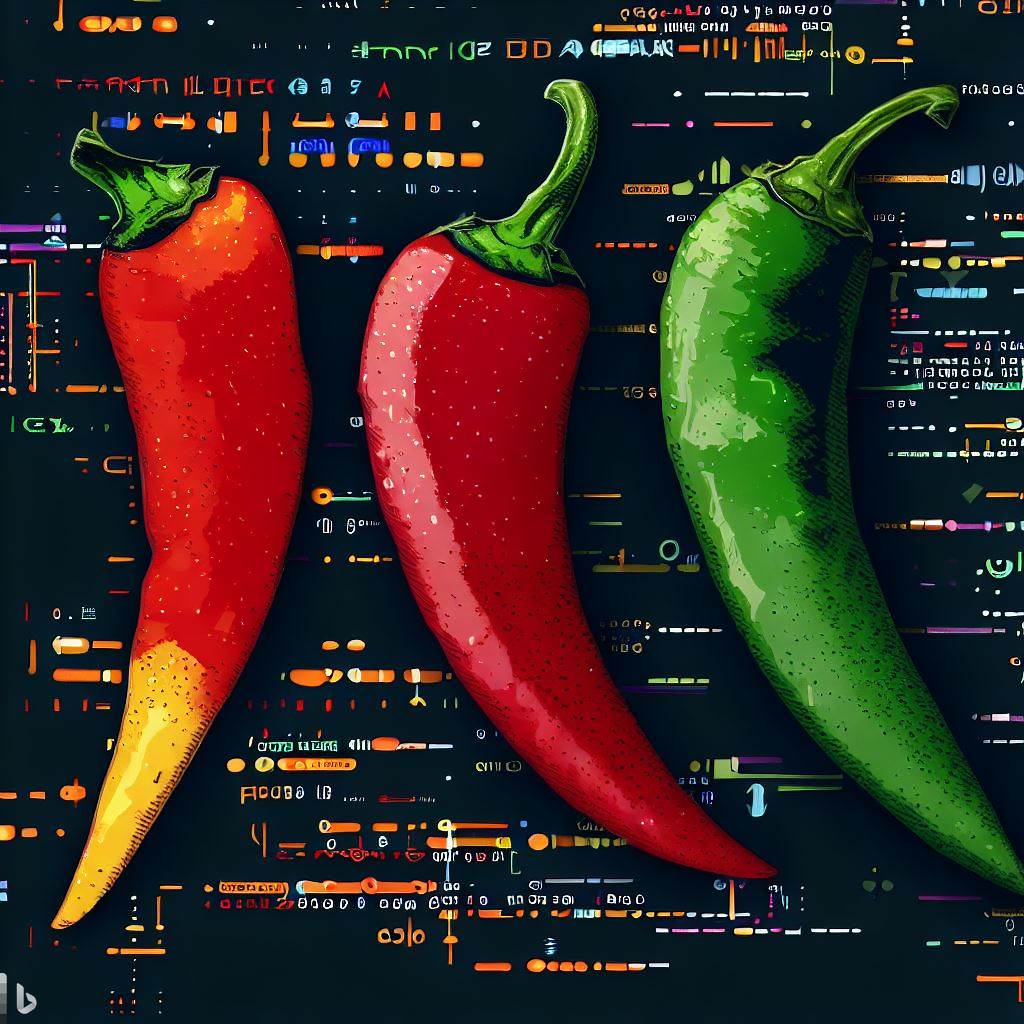

The dictionary defines ‘chile’ as a small hot-tasting pod of a variety of capsicum, used chopped (and often dried) in sauces, relishes, and spice powders. But as we embark on this spicy journey, allow me to clarify: chiles are so much more than a mere definition—they’re a scientific marvel, a cultural phenomenon, and above all, a narrative that resonates across palates and transcends borders.
Byte: Scoville Heat Units, the Algorithm of Spiciness
It’s one thing to say that a chile is hot, but another to quantify that heat. Enter the Scoville Heat Unit (SHU), a unit of measurement for pungency (spiciness) originally developed by a chemist named Wilbur Scoville. The scale ranges from zero for bell peppers to over 2 million for the Carolina Reaper.
But did you know the Scoville test is basically an algorithm? Scoville would dilute a chile extract in sugar water until its heat was just barely detectable by a panel of tasters. The degree of dilution translates into SHUs, offering a scalar understanding of how one chile compares to another.
For the programmers out there, think of the Scoville algorithm as a while-loop, repetitively diluting the extract until reaching the condition where it’s no longer hot. Elegant, isn’t it?
Bite: A Universe of Flavors
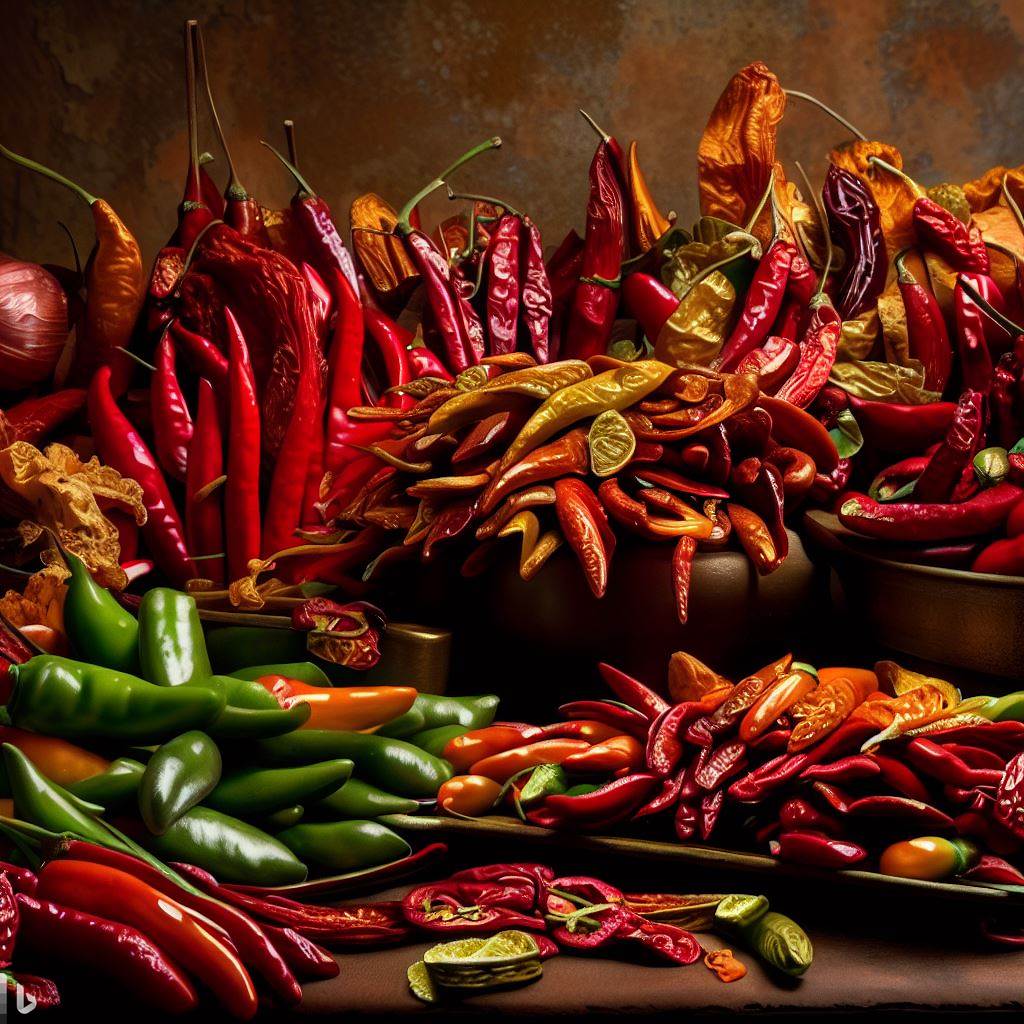
One might argue that the chile is the universe in a pod. From the smoky pasilla to the fruitiness of Scotch Bonnet, each chile brings a world of flavors. Originating from the Americas, the chile has traveled across the world, influencing cuisines from Thailand to Ethiopia.
Have you ever tried aji amarillo from Peru? If not, you’re missing out on a sunburst of flavors that range from a mild heat to fruity overtones. Each chile acts like a unique key in a hashmap, unlocking a specific combination of heat, sweetness, bitterness, or even floral notes.
The Algorithms of Growing Chiles
You can think of chile cultivation as a set of recursive functions that depend on several variables: soil type, temperature, and moisture levels. Each parameter affects the “output,” which in this case is the chile’s heat level and flavor profile. A smidgen of extra sunlight or a spoonful less of water, and voila! A new variant is compiled.
Ollie’s Algorithmic Salsa Recipe
Ingredients:
- 2 medium-sized ripe tomatoes, finely chopped
- 1 jalapeño, seeds removed and minced
- 1 poblano pepper, seeds removed and minced
- 1/2 red onion, finely chopped
- 1 clove garlic, minced
- Juice of 1 lime
- Handful of fresh cilantro leaves, chopped
- 1/2 teaspoon of chipotle powder (optional)
- Salt to taste
Instructions:
- Initialize the Base: In a mixing bowl, combine the finely chopped tomatoes and red onion. This forms the base of your salsa—think of it as initializing an empty array that you’re about to populate with flavorful elements.
- Add the Peppers: Introduce the minced jalapeño and poblano peppers to the bowl. These will act as your spicy and earthy variables, lending depth to your algorithmic salsa.
- Garlic & Lime Juice: Stir in the minced garlic and lime juice. In coding parlance, these are your utility functions that take your base array and turn it into something far more interesting.
- Cilantro Commit: Add a handful of chopped cilantro. Like the finishing touch in a piece of software, cilantro adds a layer of complexity that completes the dish.
- The Optional Chipotle Powder: If you’re feeling adventurous, add a half teaspoon of chipotle powder for a smoky undertone. This is like enabling an advanced feature in your software that’s not necessary but adds a cool edge.
- Compile Flavors: Mix all the ingredients thoroughly. You’re essentially compiling the different elements into a single, delicious program.
- Season & Debug: Taste the salsa. If it needs debugging—more salt, perhaps, or an extra squeeze of lime—now’s the time to adjust.
- Execute and Serve: Once your salsa is debugged to perfection, it’s ready to be executed, i.e., served. This algorithmic salsa pairs well with chips, tacos, or just about any dish that could use a burst of flavor.
And there you have it—algorithmic salsa that’s as versatile and complex as any piece of well-crafted code. Whether you’re munching on it while debugging or serving it at a dinner party, this salsa is sure to impress.
How to Hack Your Salsa with the Right Chiles
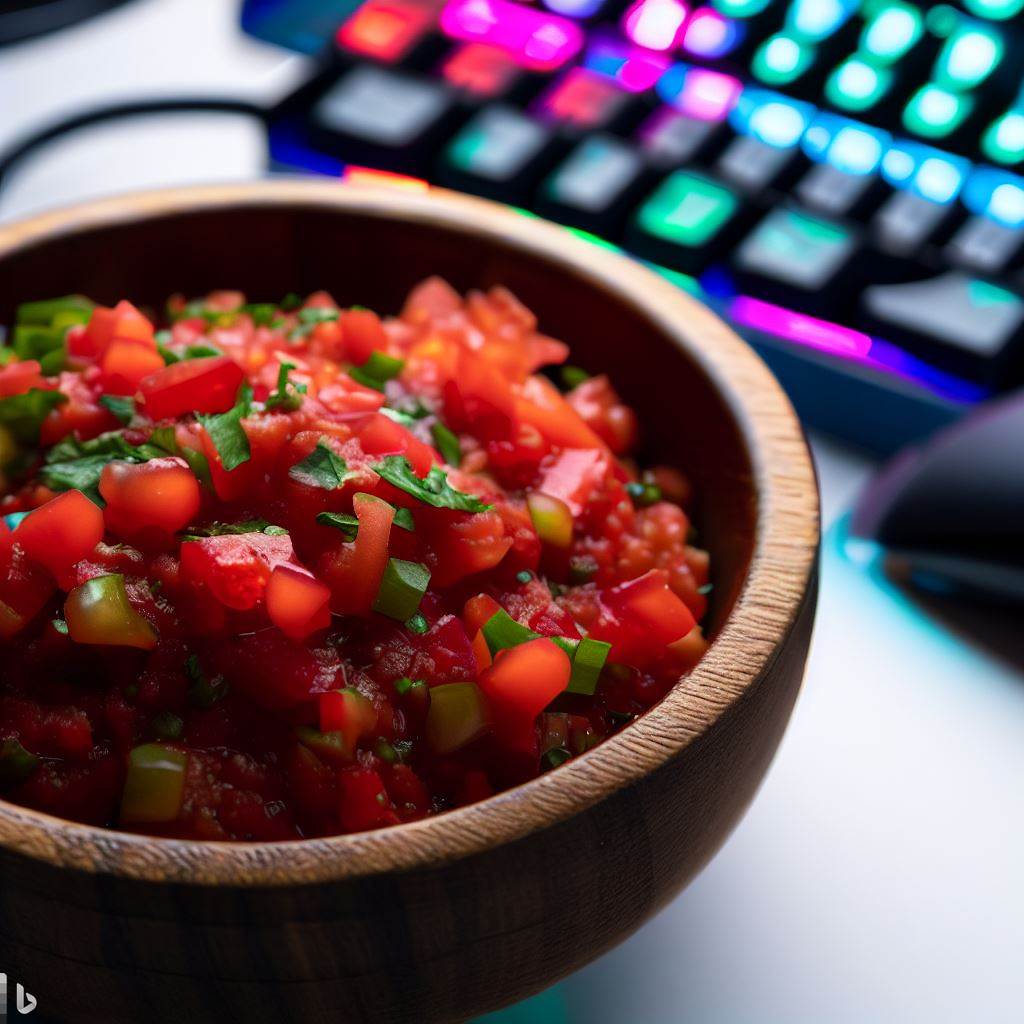
Just as you’d meticulously choose the right algorithm for a specific computational problem, you should carefully select chiles for your salsa. For a well-balanced salsa, I recommend using a combination. A jalapeño for heat, a poblano for earthiness, and perhaps a dash of cayenne for that extra kick. But why stop there? Hack your salsa with a sprinkle of chipotle powder for smokiness or infuse it with some tech by simulating different chile combinations. Yes, you can actually do that.
An Ode to the Chile
To me, chiles are like lines of code—each one has a role to play, contributing to a larger system or dish. The complexity behind their heat, the science that informs their growth, and the cultural significance they carry make chiles more than just a food item. They’re a topic worthy of a deep dive, or maybe even a lifetime of exploration.
So the next time you’re enjoying a spicy dish or dabbling in a coding project, remember that the universe of chiles is as rich and complex as any algorithm out there. They remind us that even in the smallest of pods, there exists a world of complexity just waiting to be discovered.
Until next time, keep the heat on—both in the kitchen and in your code editor.
Cheers,
Ollie Thorne.




Leave a Reply